 ultimate-guide
Best Outdoor Gear for High Altitude Trekking
Table of Contents
- Why Gear Selection Matters at High Altitude
- High Altitude Layering System Guide
- Durable Hiking Clothes for Men 2026
- Backpack Sizing and Load Distribution
- Footwear for Rugged, High-Altitude Terrain
- How to Prevent Altitude Sickness While Hiking
- Navigation, Hydration, and Emergency Essentials
- Weight-to-Warmth Ratio and Gear Failure Contingencies
- Frequently Asked Questions
Last Updated: September 21, 2026
Why Gear Selection Matters at High Altitude
The difference between a comfortable trek and a dangerous one often comes down to one thing: what you're wearing. At high altitude, your body faces stresses that low-elevation gear simply isn't designed to handle. Thin air means less oxygen, colder temperatures drop faster, and weather shifts in minutes. Your gear has to work harder than it ever will at sea level.
This is where best outdoor gear for high altitude trekking becomes non-negotiable. The right equipment doesn't just make you comfortable, it keeps you alive. We understand that active adventurers need apparel that performs on technical terrain while looking sharp enough for the city. That philosophy extends to understanding why altitude demands specific solutions.
Most people underestimate how quickly conditions deteriorate above 10,000 feet. Your body burns more calories fighting the cold and thin air. Moisture management becomes critical because sweat in a cold environment is dangerous. Wind chill at elevation can drop apparent temperature by 30 degrees in seconds. Standard athletic gear fails in these conditions because it wasn't engineered for the physiological demands of high altitude.
The stakes are real. Hypothermia, altitude sickness, and gear failure are not theoretical risks, they're documented problems that catch unprepared trekkers every season. Selecting the right gear is how you prevent becoming a statistic.
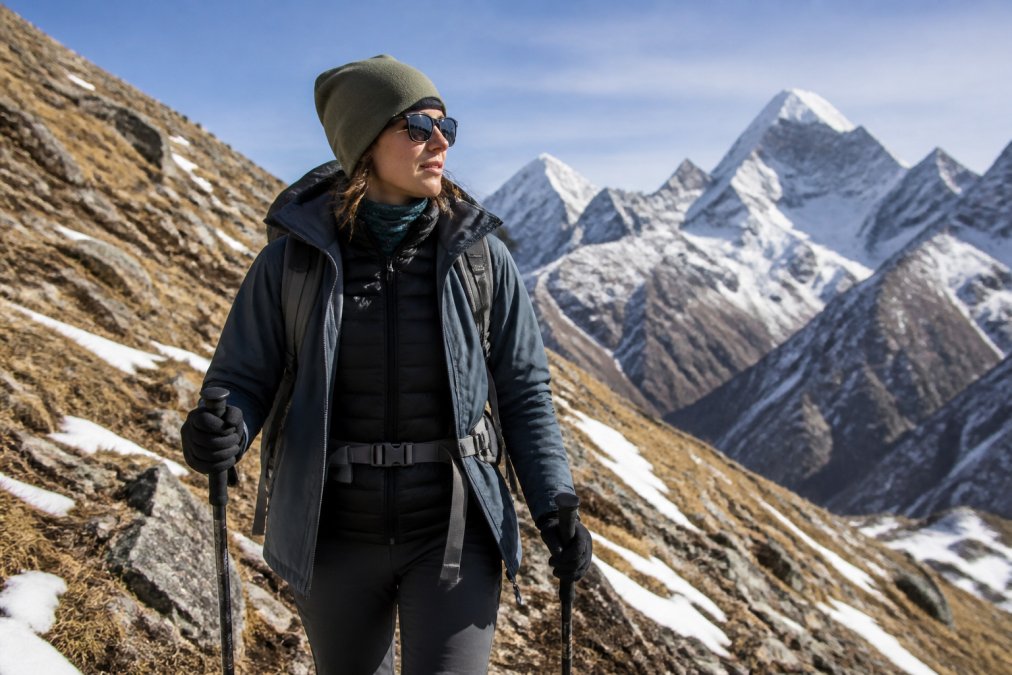
High Altitude Layering System Guide
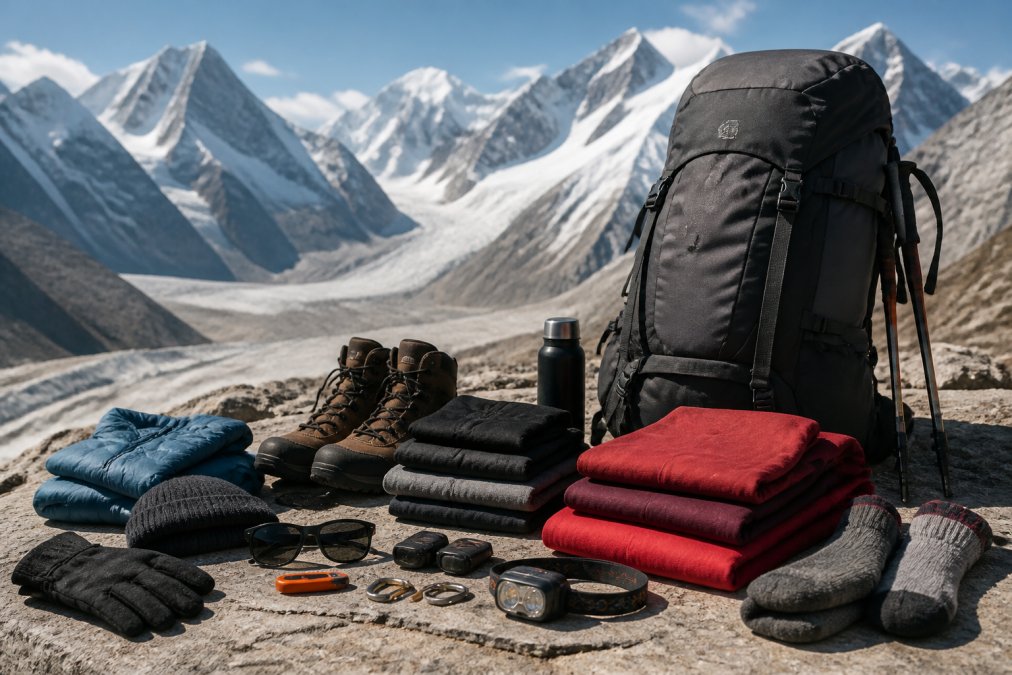
The foundation of survival at elevation is the layering system. Three distinct layers work together to regulate body temperature, manage moisture, and protect you from wind and precipitation. This system is non-negotiable for best outdoor gear for high altitude trekking because it's the only approach that handles the wild temperature swings you'll experience.
Base Layers: Moisture-Wicking Foundation
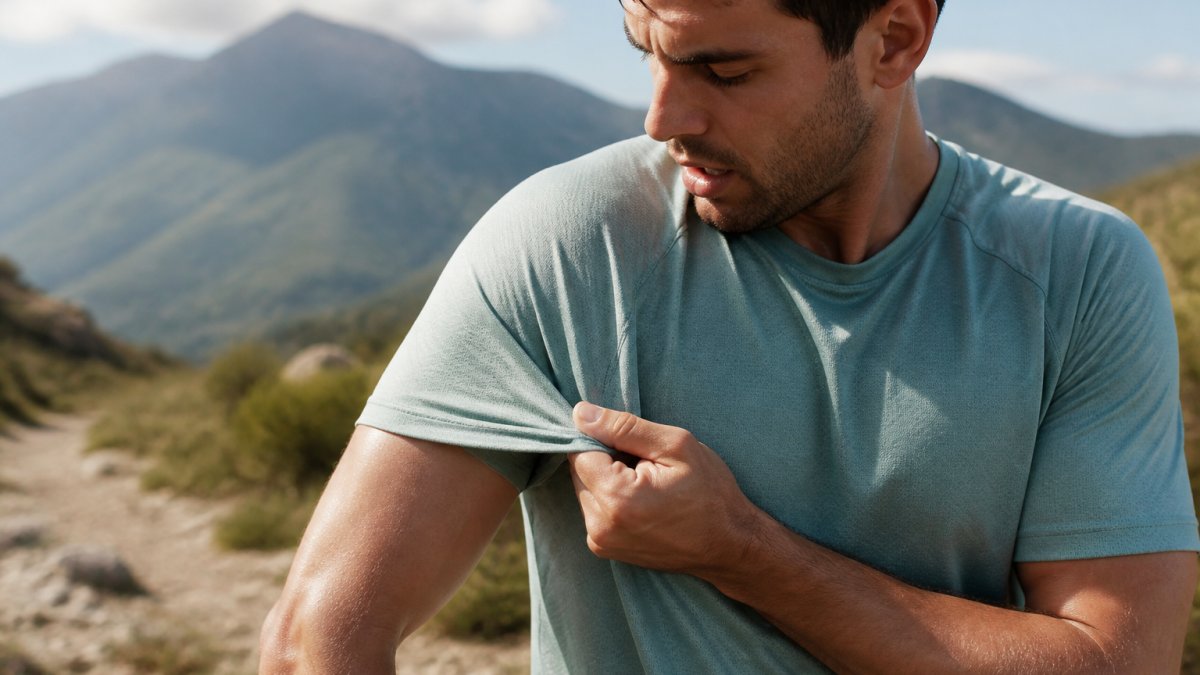
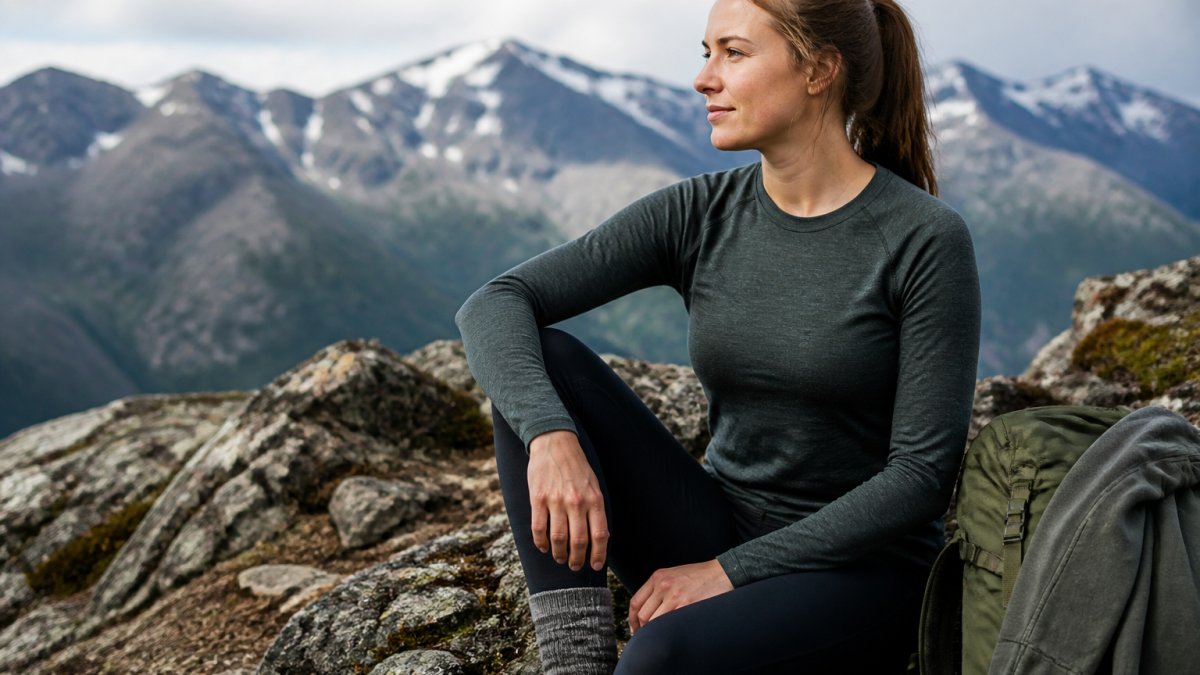
Your base layer sits directly against your skin. Its job is simple: move sweat away from your body and toward the next layer. Cotton fails catastrophically at altitude because it absorbs moisture and holds it, dropping your core temperature. Merino wool and synthetic fabrics like polypropylene work because they wick moisture while maintaining insulation even when damp.
Merino wool is the gold standard for multi-day treks. It regulates temperature naturally, resists odor, and performs well in cold conditions. Synthetic base layers dry faster and cost less, making them practical for climbers who need quick-drying gear between camp setups. The choice depends on your tolerance for cost and how much time you spend in genuinely wet conditions.
Weight matters at altitude. Your body is already working harder to function in thin air. A lightweight base layer reduces the metabolic load you're carrying. Look for fabrics rated for high-output activity, they're engineered to handle the sweat production that comes with climbing steep terrain.
Mid-Layers: Active Insulation for Variable Temperatures
Mid-layers trap warm air while allowing moisture to escape. This is where most people make critical mistakes. A dense fleece works at sea level but becomes a sweat trap at altitude when you're climbing hard. Active insulation like Polartec Alpha is designed differently, it allows moisture to pass through while maintaining warmth, preventing the buildup that leads to rapid cooling when you stop moving.
Loft, the space between fibers that traps air, is your metric here. Higher loft means better insulation per ounce, which matters when every gram counts at altitude. Synthetic insulation like PrimaLoft maintains loft even when compressed, while down fill power (measured in cubic inches per ounce) indicates how efficiently down traps air.
Outer Shell: Waterproof-Breathable Protection
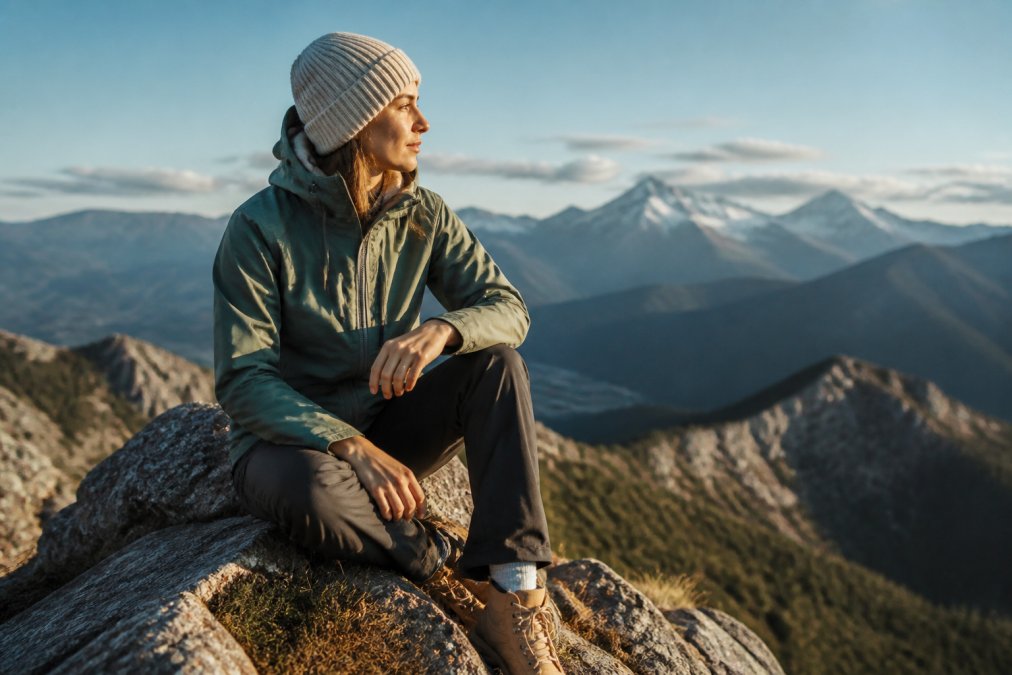
Your hardshell is the barrier between you and the environment. At altitude, this layer faces wet snow, wind, and rapid weather changes. Waterproof-breathable membranes like Gore-Tex allow moisture vapor to escape while blocking liquid water. This prevents the interior from becoming saturated while you're exerting.
Seam-sealed construction is mandatory. Unsealed seams are weak points where water penetrates. Check that all stress points, shoulder seams, underarm seams, hood attachment, are sealed with tape. A hardshell without sealed seams is a liability on technical terrain where you're constantly moving through wet conditions.
Weight and packability matter. A shell that weighs ounces instead of pounds reduces fatigue on long climbs. Look for softshell options for moderate conditions where full waterproofing isn't essential, they offer better mobility and breathability when you don't need maximum protection.
Durable Hiking Clothes for Men 2026
Durability at altitude means fabric that resists tearing on sharp rock, maintains integrity through repeated compression and expansion cycles, and handles the wear patterns specific to high-altitude movement. Durable hiking clothes for men 2026 need to balance weight, performance, and longevity.
Ripstop nylon and high-denier fabrics are the foundation. Denier measures fiber thickness, higher denier means more durable but heavier fabric. At altitude, you need 200+ denier in high-stress areas like seat, knees, and pack contact points. Lighter fabric (100-150 denier) works for low-stress areas where weight matters more than abrasion resistance.
Articulated knees in pants reduce strain on seams and fabric during climbing. Gusseted crotches prevent tearing during high-step movements. Reinforced pockets and pack attachment points handle the constant friction of gear and equipment. These features aren't luxury, they're engineering solutions that prevent failure on technical terrain.
Tremendous World's premium athletic lifestyle apparel applies this durability philosophy to streetwear that transitions from mountain to city. The focus is on fabric construction that survives both technical terrain and daily wear, which requires understanding where stress concentrates on your body during movement.
Backpack Sizing and Load Distribution
Your backpack is the system that carries everything. At altitude, load distribution isn't about comfort, it's about preventing injury when every breath is harder and your body is already stressed by thin air.
Pack volume should match your trip duration. A 40-50 liter pack works for 3-4 day treks. A 60-65 liter pack handles longer expeditions. The mistake most people make is overstuffing a too-small pack, which creates uneven weight distribution and strains suspension systems.
Load distribution follows a simple rule: heavier items sit closer to your spine and slightly above your hips. Sleeping bag goes low in the pack. Tent and rain gear sit mid-pack. Lighter items like clothing go high. This arrangement keeps your center of gravity stable on steep terrain.
| Pack Model | Volume | Best For | Key Feature |
|---|---|---|---|
| Osprey Atmos AG 65 | 65L | Heavy loads, long treks | Anti-Gravity suspension |
| Hyperlite Mountain Gear Unbound 40 | 40L | Ultralight thru-hiking | Dyneema fabric, low weight |
| Granite Gear Blaze 60 | 60L | Balanced performance | Removable lid converts to chest pack |
| Gregory Paragon 60 | 60L | Mid-range budget | FreeFloat suspension, comfortable |
Footwear for Rugged, High-Altitude Terrain
Your feet are the foundation. At altitude, foot fatigue compounds the stress from thin air and cold. The wrong footwear leads to blisters, ankle instability, and accelerated exhaustion.
Traditional hiking boots provide ankle support but add weight that matters on long climbs. Trail running shoes offer lighter weight and natural foot positioning, but less support on technical terrain. The choice depends on terrain difficulty and your ankle strength.
Fit is non-negotiable. High-altitude trekking puts extreme stress on feet. A boot that's slightly too tight or loose will cause problems that compound over days of climbing. Test footwear on practice hikes at elevation before committing to a multi-week expedition.
How to Prevent Altitude Sickness While Hiking
Altitude sickness occurs when your body can't adapt to lower oxygen levels fast enough (pubmed.ncbi.nlm.nih.gov). The symptoms, headache, nausea, fatigue, are your body's warning system. Ignoring them leads to serious conditions like high altitude cerebral edema (HACE) or high altitude pulmonary edema (HAPE).
Acclimatization is the primary prevention method. Ascending gradually allows your body to produce more red blood cells and adapt to thin air. The standard guideline is to gain no more than 1,000-1,500 feet of elevation per day above 8,000 feet. Rest days at the same elevation accelerate acclimatization.
Hydration is critical but often overlooked. Thin air is extremely dry, and you lose water faster through respiration at altitude. Drink more water than you think you need, pale urine indicates adequate hydration. Dehydration accelerates altitude sickness symptoms.
Nutritional intake matters. Your body burns significantly more calories at altitude. Inadequate calories impair acclimatization and increase fatigue.
Navigation, Hydration, and Emergency Essentials
Navigation at altitude demands tools that work in harsh conditions. GPS devices fail in deep valleys and near vertical rock. Satellite messengers provide two-way communication when cell networks don't exist.
Weight-to-Warmth Ratio and Gear Failure Contingencies
The weight-to-warmth ratio determines how efficiently your gear insulates relative to what you're carrying. A sleeping bag with 800-fill-power down provides more warmth per ounce than lower-fill options. Understanding this ratio prevents carrying excessive weight while maintaining survival capability.
Frequently Asked Questions
What is the 3-layer rule for high altitude trekking?
The three-layer system prevents hypothermia and thermal regulation failure at altitude: a moisture-wicking base layer pulls sweat away from skin, an insulating mid-layer (wool or synthetic) traps warm air, and a waterproof-breathable outer shell blocks wind and rain while allowing vapor escape. This combination maintains core temperature in thin air where your body loses heat faster due to lower oxygen availability and reduced metabolic efficiency.
What altitude is considered high for hiking and trekking?
High altitude trekking typically begins above 8,000 feet, where oxygen levels drop noticeably and acclimatization becomes critical. Extreme altitude starts above 12,000 feet. At 14,000 feet and beyond, physiological stress increases significantly, your body processes oxygen less efficiently, dehydration accelerates, and altitude sickness risk climbs sharply. Gear designed for high altitude must account for these physiological changes.
How do I prevent altitude sickness while hiking at elevation?
Altitude sickness prevention combines acclimatization, hydration, and proper pacing. Ascend gradually, gain no more than 1,000-1,500 feet per day above 8,000 feet, and include rest days every 3-4 days. Drink 3-4 liters of water daily, eat carbohydrate-rich foods, and avoid alcohol. Wear layered, breathable gear to maintain thermal stability without overheating, which stresses your cardiovascular system further. If symptoms (headache, nausea, dizziness) appear, descend immediately.
What makes durable hiking clothes essential for high altitude trekking?
Durable hiking clothes for high altitude must withstand extreme weather, UV exposure, and repeated strain on technical terrain. Ripstop nylon, merino wool blends, and reinforced seams resist tears and abrasion. Quick-dry, moisture-wicking fabrics prevent sweat accumulation that leads to hypothermia in thin air. UV-protective treatments shield skin from intense sun reflection off snow and ice. Durability means your gear survives multiple treks without degradation, justifying the investment for serious altitude adventurers.