 listicle
Premium Outdoor Gear for Men: Top Picks for 2026
Table of Contents
- What Makes Premium Outdoor Gear Worth It
- Quick Comparison: Top Premium Outdoor Gear for Men
- Durable Hiking Clothes for Men 2026: What to Look For
- How to Layer Outdoor Clothing for Cold Weather
- Backpacking and Camping Essentials: Packs and Hydration
- Maintenance Tips for Waterproof Outdoor Gear
- Sustainability, Size Inclusivity, and Fit Guides
- Which Gear Is Right for You?
Last Updated: August 22, 2026
Choosing the wrong gear for a mountain trail means cut trips short, blisters that sideline you for days, and expensive replacements. At Tremendous World, we've analyzed what separates gear that holds up across seasons from gear that fails on its first real test. This guide covers premium outdoor gear for men for 2026, built around real product data and honest trade-offs most gear roundups skip.
What Makes Premium Outdoor Gear Worth It
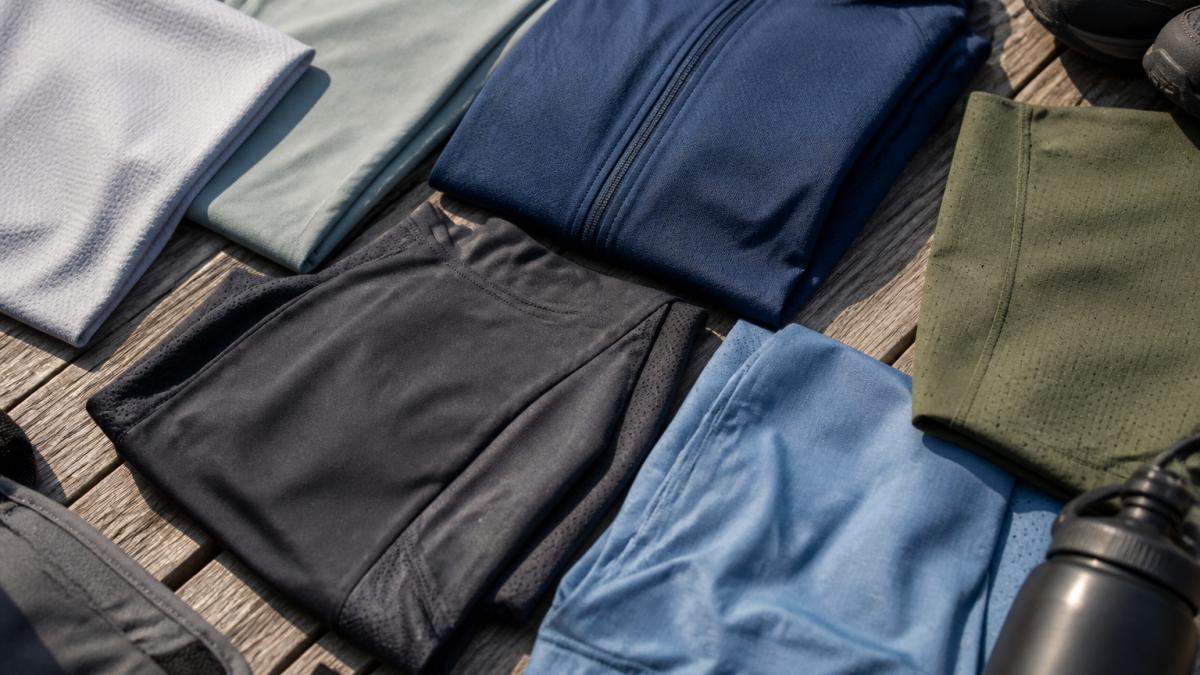
Premium outdoor gear is engineered to maintain performance under environmental stress, moisture, wind, temperature swings, and abrasion, where standard athletic wear fails. A ripstop nylon shell with seam-sealed construction costs more upfront but wins on cost-per-wear over three seasons of use. Gear built with abrasion-resistant fabrics, reinforced stress points, and field-serviceable components lasts years longer and transitions from rugged terrain to urban environments without looking out of place.
Quick Comparison: Top Premium Outdoor Gear for Men
| Product | Category | Starting Price | Best For |
|---|---|---|---|
| Tremendous World Collection | Lifestyle Apparel | Visit site | City-to-trail versatility |
| Patagonia Nano Puff Jacket | Insulated Jacket | $239 | Packable warmth, wet conditions |
| Smartwool Merino 250 Base Layer | Base Layer | $110 | Cold-weather thermal regulation |
| Darn Tough Hiker Boot Socks | Footwear | $30 | Blister prevention, all-day comfort |
| Osprey Atmos AG 65 | Backpacking Pack | $370 | Multi-day trips, heavy loads |
| REI Co-op Flash 55 | Backpacking Pack | $229 | Lightweight value, modular design |
| Hydro Flask 32 oz. Trail Series | Hydration | $49.95 | Insulated carry, reduced pack weight |
Durable Hiking Clothes for Men 2026: What to Look For
Durable hiking clothes prioritize four material properties: moisture-wicking performance, breathability, abrasion resistance, and thermal regulation. Four-way stretch fabrics and articulated knees have become baseline for technical hiking pants. For outerwear, seam-sealed construction keeps moisture out at the points where fabric panels meet, exactly where standard jackets fail first.
Insulated Jackets and Parkas
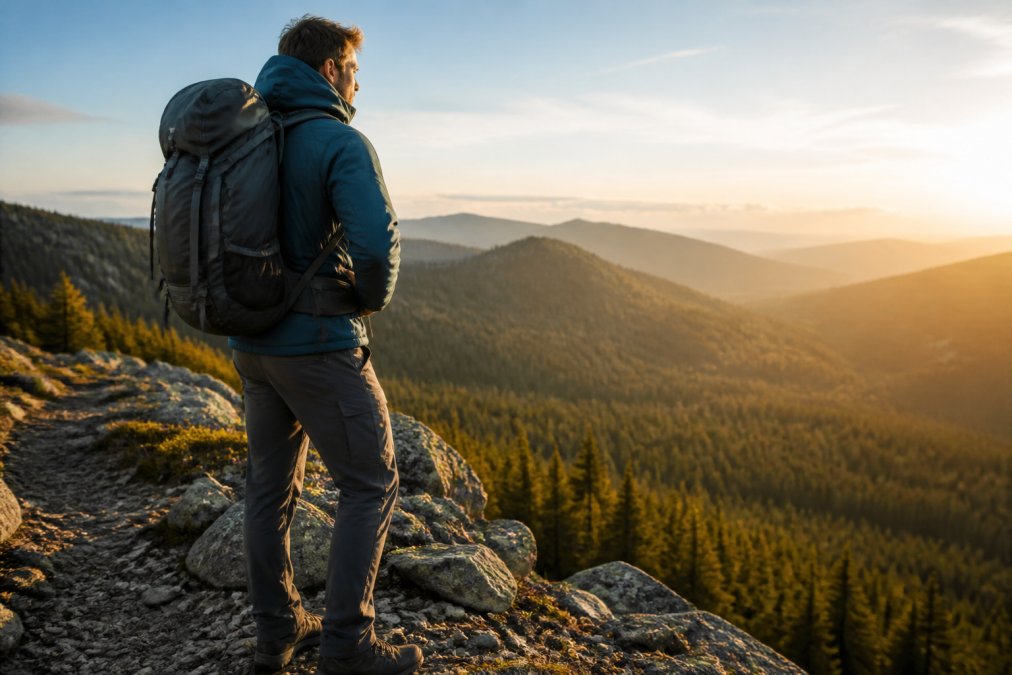
The Patagonia Men's Nano Puff Jacket ($239) is the benchmark for synthetic insulated jackets. Its 60-g PrimaLoft Gold Insulation Eco provides warmth even when wet, a critical advantage over down. The 100% recycled polyester ripstop shell carries a durable water repellent finish that sheds light moisture without a separate rain layer and stuffs into its own internal chest pocket for alpine conditions.
Pros: Warm when wet, packable, Fair Trade Certified production.
Cons: Limited breathability during high-output activity; not a standalone outer layer in severe alpine conditions.
Merino Wool Base Layers
The Smartwool Men's Merino 250 Base Layer Crew ($110) is the right answer for cold-weather base layering. Merino wool regulates temperature across a wider range than synthetic alternatives and insulates even when wet. Flatlock seam construction minimizes chafing, and shoulder panels eliminate top seams to prevent pressure points under a pack. Merino's natural fiber structure inhibits bacterial growth, meaning this layer stays wearable across several days without washing, critical for multi-day trips.
Trade-off: Heavier than thin synthetic base layers and can run warm in mild conditions. For cold-weather activities, nothing performs as consistently.
Technical Hiking Pants and Moisture-Wicking Performance Fabrics
Technical hiking pants separate themselves through articulated knees, reinforced seat panels, and moisture-wicking fabrics that move sweat away from skin during sustained output. For 2026, the strongest technical pants combine ripstop nylon for abrasion resistance with stretch panels at the knee and hip. Zip-off convertible designs add versatility for variable-temperature days.
Footwear and Socks for Rugged Terrain
Darn Tough Men's Hiker Boot Full Cushion Midweight Hiking Socks ($30) are the standard to beat. Made with fine gauge merino wool, they're fast-drying, naturally odor-resistant, and built with True Seamless toe construction that eliminates the friction point responsible for most trail blisters. Darn Tough backs these with an unconditional lifetime guarantee and manufactures them in Vermont.
For boots, prioritize ankle support, outsole grip pattern, and waterproofing. A seam-sealed waterproof boot keeps feet dry in stream crossings and wet trail conditions.
How to Layer Outdoor Clothing for Cold Weather
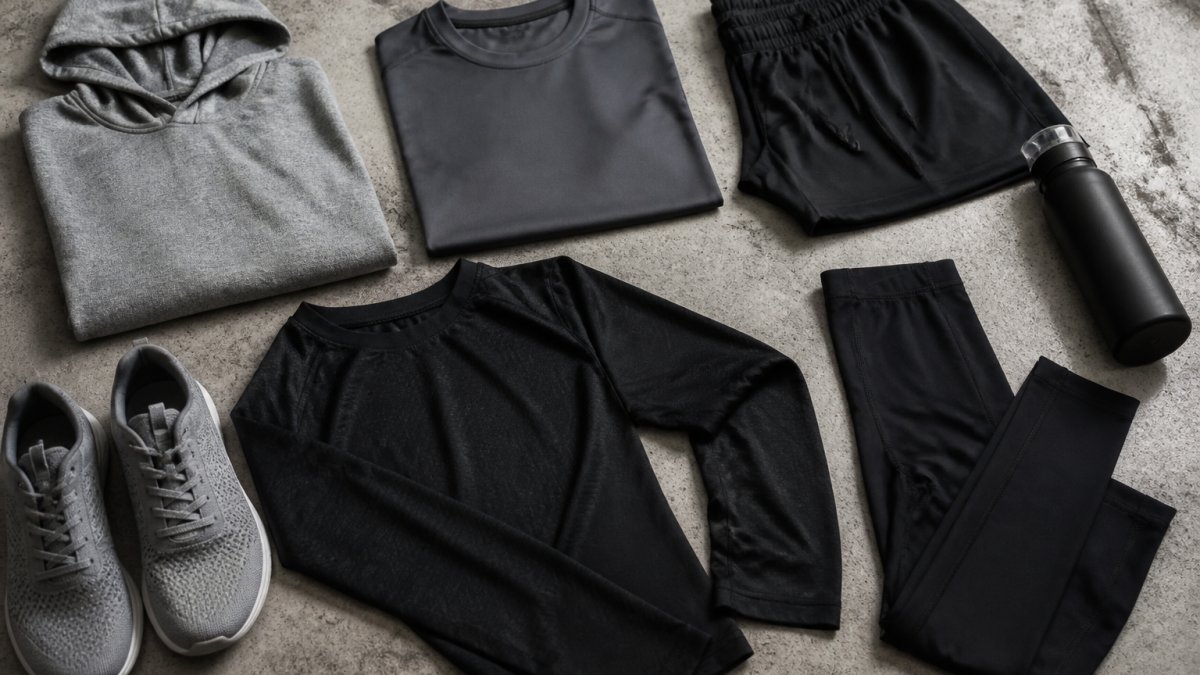
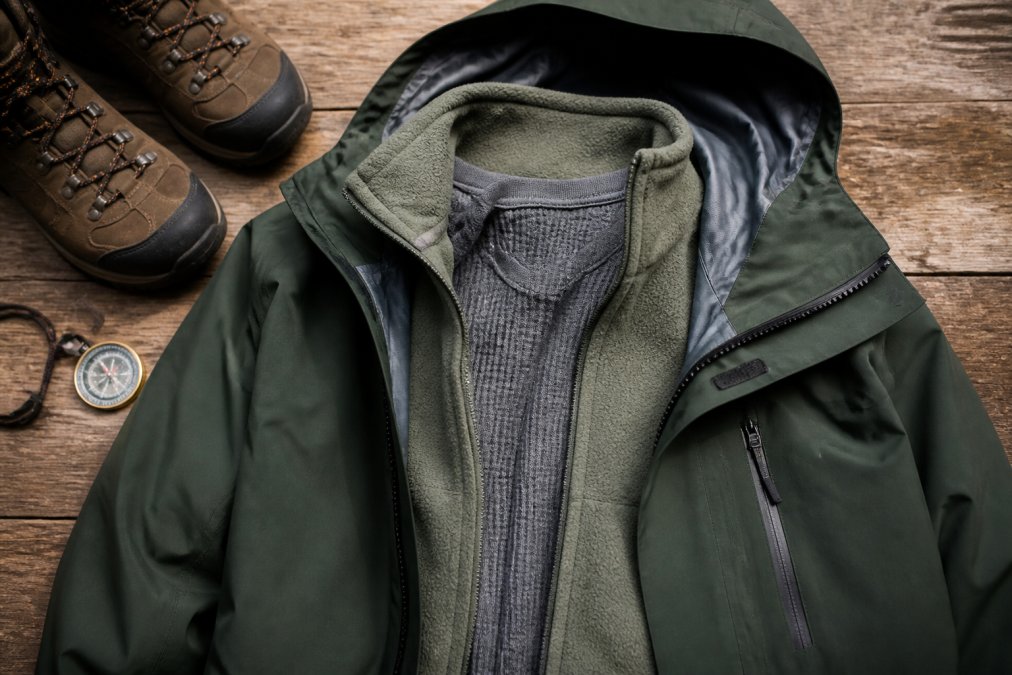
Layering outdoor clothing for cold weather follows a three-layer system: base layer for moisture management, mid-layer for insulation, and shell jacket for weather protection. A common mistake is wearing too many layers at high output, which produces sweat that saturates the base layer and then chills rapidly during rest stops. The goal is temperature management, not maximum warmth.
Activity-Specific Layering Matrices
| Activity | Base Layer | Mid-Layer | Shell |
|---|---|---|---|
| Alpine skiing / snowshoeing | Merino 250 weight | Fleece or synthetic insulated jacket | Waterproof, windproof hardshell |
| Winter hiking (moderate pace) | Merino 150-200 weight | Lightweight fleece | Softshell or light hardshell |
| Backpacking (high output) | Lightweight synthetic | Packable insulated jacket (in pack) | Windproof softshell |
| Summit / alpine conditions | Merino 250 weight | Heavy fleece or down mid-layer | Full hardshell with seam-sealed construction |
| Trail running in cold | Lightweight merino or synthetic | None (or vest) | Windproof running jacket |
Build your system around the coldest moment of your day, not the warmest.
Backpacking and Camping Essentials: Packs and Hydration
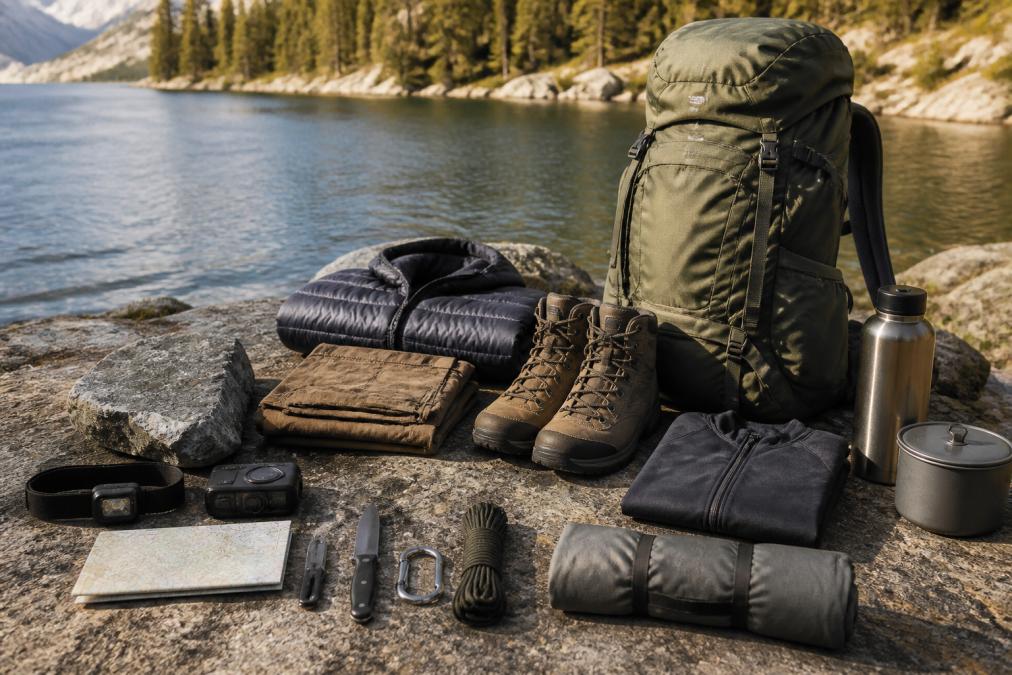
The right backpacking pack determines whether a multi-day trip is enjoyable or punishing.
Osprey Atmos AG 65 ($370) is the benchmark for comfort on heavy loads. The AntiGravity suspension system uses a 3D-suspended mesh back panel that keeps the pack away from your back, allowing airflow across the full contact surface. For multi-day trips with loads above 30 lbs, this ventilation is significant. The included raincover uses PFC/PFAS-free DWR and bluesign-approved materials.
Trade-off: Heavier than ultralight alternatives and higher-priced. For serious backpackers who prioritize comfort over weight savings, it's the right call.
REI Co-op Flash 55 ($229) is the better choice for backpackers who want a capable, lightweight pack without the premium price. The adjustable torso length provides a customized fit across body types, and the 100-denier recycled nylon Robic ripstop construction is durable for its weight class.
Limitation: Max recommended load of 30 lbs. For ultralight backpackers and shorter multi-day trips, the Flash 55 is excellent value.
Hydration: The Hydro Flask 32 oz. Lightweight Wide Mouth Trail Series Bottle ($49.95) solves the weight problem that keeps many hikers on standard insulated bottles. It maintains TempShield double-wall vacuum insulation, cold for up to 24 hours, hot for up to 6 hours, while being 25% lighter than classic Hydro Flask bottles. The 18/8 Pro-Grade Stainless Steel construction is BPA-free and phthalate-free.
According to Leave No Trace Center for Outdoor Ethics, proper hydration management is one of the most critical factors in backcountry safety.
Maintenance Tips for Waterproof Outdoor Gear
Maintenance for waterproof outdoor gear comes down to one core principle: the durable water repellent finish on your shell jacket needs periodic restoration. DWR is a coating applied to the outer fabric surface that causes water to bead and roll off. Over time, dirt, body oils, and repeated compression degrade this coating.
Restoring DWR performance:
- Wash the garment in warm water with a technical cleaner (not standard detergent)
- Rinse thoroughly and tumble dry on low heat, heat reactivates DWR
- If beading is still poor, apply a spray-on or wash-in DWR treatment
Seam care: Inspect seam tape annually. If tape is peeling, reseal with seam sealer before the next season.
Storage: Never store waterproof gear compressed in a stuff sack long-term. Hang jackets and pants loosely to prevent insulation compression and seam tape degradation.
Sustainability, Size Inclusivity, and Fit Guides
Two angles that most gear roundups skip: whether the gear is made ethically and whether it actually fits a range of body types.
Sustainability and Ethical Manufacturing
The Patagonia Nano Puff Jacket uses 100% recycled polyester ripstop shell and carries Fair Trade Certified factory production. The Osprey Atmos AG 65 uses 100% recycled materials and bluesign-approved fabrics, which meet standards for responsible chemical use in textile manufacturing. Darn Tough hiking socks are made in Vermont, meaning domestic manufacturing with transparent labor practices and significantly lower shipping emissions.
The bluesign system for responsible textile manufacturing sets standards for chemical inputs, resource efficiency, and worker safety across the production chain.
Size Inclusivity and Fit
Size inclusivity is a genuine gap in the premium outdoor gear market. Many technical pieces run narrow in the shoulders and short in the torso for larger or broader body types. Osprey packs offer adjustable torso length on most models, REI Co-op Flash 55 includes adjustable torso sizing, Smartwool base layers run true to size through size XXL, and Darn Tough socks are available through size XL.
Tremendous World's collection is built for active individuals who don't fit the narrow silhouette that most technical brands design around.
Which Gear Is Right for You?
For weekend hikers doing day trips and occasional overnights, the Smartwool Merino 250 base layer, the Patagonia Nano Puff, and the REI Co-op Flash 55 cover most scenarios at a combined investment that makes sense for frequency of use.
For multi-day backpacking trips with heavy loads, the Osprey Atmos AG 65 is worth the premium for the comfort difference on day two and three. Pair it with Darn Tough socks and a proper three-layer system.
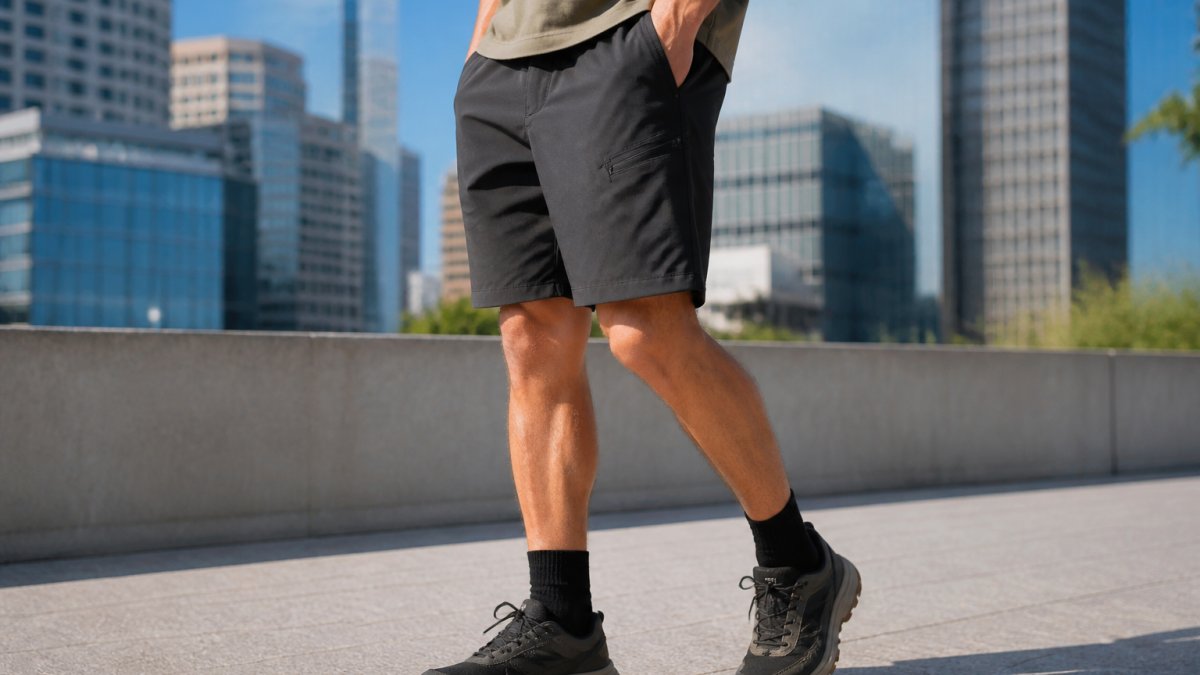
For the guy who moves between a city commute and mountain trails on the same weekend, the priority is versatility. Tremendous World's athletic lifestyle apparel fills this gap, pieces designed to perform on trail and look intentional in the city.
The American Hiking Society's trail gear guidance consistently points to layering systems and moisture management as the highest-priority investments for hikers at any level.
Quick decision guide:
| Your Situation | Top Priority Gear |
|---|---|
| Day hiker, moderate terrain | Merino base layer + packable insulated jacket + trail socks |
| Multi-day backpacker, heavy loads | Osprey Atmos AG 65 + three-layer system + insulated bottle |
| Lightweight / fast-and-light backpacker | REI Flash 55 + synthetic base layer + windproof shell |
| City-to-trail versatility | Tremendous World athletic lifestyle apparel + trail-capable footwear |
| Cold-weather alpine | Merino 250 base + heavy mid-layer + seam-sealed hardshell |
Most men in this category are underinvesting in base layers and socks, and overinvesting in visible outerwear. Start with what touches your skin first.
Gear that fails mid-trip isn't a gear problem, it's a selection problem. Tremendous World's collection is built for active individuals who need apparel that performs across environments without choosing between style and function. Whether you're building a full layering system for alpine conditions or looking for versatile athletic lifestyle pieces that hold up on trail and look sharp off it, the right starting point is understanding what you're actually asking your gear to do. Shop Tremendous World and find pieces engineered for the life you're already living.
== FAQ ANSWERS (audit these too, same rules) ==
[1] Q: What defines premium outdoor gear for men? A: Premium outdoor gear combines technical performance fabrics, field-tested construction, and versatile design. Key markers include moisture-wicking and breathable materials like merino wool or synthetic ripstop, seam-sealed waterproof shells, articulated knees for freedom of movement, and abrasion-resistant panels where gear takes the most wear. The difference from budget gear shows up over time: better thermal regulation, longer lifespan, and consistent performance across changing conditions.
[2] Q: Is expensive outdoor gear actually worth the investment? A: For frequent outdoor use, yes. A well-constructed insulated jacket or a pair of durable hiking pants will outlast several cheaper alternatives, lowering your cost per use significantly. Features like DWR waterproof finishes, four-way stretch panels, and UPF-rated fabrics deliver real performance differences on the trail. If you only head out a few times a year, prioritize one or two high-quality anchor pieces, a reliable shell jacket and a merino base layer, rather than a full kit.
[3] Q: What are the best materials for all-weather outdoor clothing? A: Merino wool excels as a base layer for thermal regulation and natural odor resistance. Synthetic fibers like PrimaLoft or recycled polyester ripstop provide lightweight insulation that stays warm even when wet. For shells, look for seam-sealed, windproof, and waterproof constructions with DWR finishes. Four-way stretch woven fabrics work well for technical hiking pants, offering both durability and ergonomic fit. Layering these materials correctly matters as much as the individual fabric choices.
[4] Q: How do I maintain waterproof outdoor gear to make it last longer? A: Wash waterproof shells regularly using a technical fabric cleaner, dirt and body oils clog the DWR coating faster than washing does. After washing, tumble dry on low heat or use a warm iron on a low setting to reactivate the DWR finish. Avoid fabric softeners, which degrade waterproof membranes. Store gear loosely rather than compressed for long periods. For seam-sealed jackets, inspect seam tape annually and apply seam sealer if you notice peeling.
[5] Q: How do I layer outdoor clothing correctly for cold weather hiking? A: A three-layer system covers most conditions. Start with a moisture-wicking merino wool or synthetic base layer that pulls sweat away from skin. Add an insulating mid-layer, a fleece or synthetic puff jacket, for thermal regulation. Finish with a windproof, waterproof shell that blocks the elements without trapping heat. Adjust by removing or venting mid-layers during high-output climbs, then adding them back at rest stops. The goal is temperature management, not maximum warmth.
Frequently Asked Questions
Q: What defines premium outdoor gear for men?
A: Premium outdoor gear combines technical performance fabrics, field-tested construction, and versatile design. Key markers include moisture-wicking and breathable materials like merino wool or synthetic ripstop, seam-sealed waterproof shells, articulated knees for freedom of movement, and abrasion-resistant panels where gear takes the most wear. The difference from budget gear shows up over time: better thermal regulation, longer lifespan, and consistent performance across changing conditions.
Q: Is expensive outdoor gear actually worth the investment?
A: For frequent outdoor use, yes. A well-constructed insulated jacket or a pair of durable hiking pants will outlast several cheaper alternatives, lowering your cost per use significantly. Features like DWR waterproof finishes, four-way stretch panels, and UPF-rated fabrics deliver real performance differences on the trail. If you only head out a few times a year, prioritize one or two high-quality anchor pieces, a reliable shell jacket and a merino base layer, rather than a full kit.
Q: What are the best materials for all-weather outdoor clothing?
A: Merino wool excels as a base layer for thermal regulation and natural odor resistance. Synthetic fibers like PrimaLoft or recycled polyester ripstop provide lightweight insulation that stays warm even when wet. For shells, look for seam-sealed, windproof, and waterproof constructions with DWR finishes. Four-way stretch woven fabrics work well for technical hiking pants, offering both durability and ergonomic fit. Layering these materials correctly matters as much as the individual fabric choices.
Q: How do I maintain waterproof outdoor gear to make it last longer?
A: Wash waterproof shells regularly using a technical fabric cleaner, dirt and body oils clog the DWR coating faster than washing does. After washing, tumble dry on low heat or use a warm iron on a low setting to reactivate the DWR finish. Avoid fabric softeners, which degrade waterproof membranes. Store gear loosely rather than compressed for long periods. For seam-sealed jackets, inspect seam tape annually and apply seam sealer if you notice peeling.
Q: How do I layer outdoor clothing correctly for cold weather hiking?
A: A three-layer system covers most conditions. Start with a moisture-wicking merino wool or synthetic base layer that pulls sweat away from skin. Add an insulating mid-layer, a fleece or synthetic puff jacket, for thermal regulation. Finish with a windproof, waterproof shell that blocks the elements without trapping heat. Adjust by removing or venting mid-layers during high-output climbs, then adding them back at rest stops. The goal is temperature management, not maximum warmth.
This article was written using GrandRanker