 listicle
5 Best Breathable Activewear Fabrics for Hiking
Table of Contents
- Quick Comparison: Breathable Activewear Fabrics at a Glance
- How We Evaluated These Fabrics
- Merino Wool: Natural Temperature Regulation for Multi-Day Hikes
- Polyester: Synthetic Performance for High-Output Activity
- Nylon: Durability and Wind Resistance for Rugged Terrain
- Hemp and Linen: Eco-Friendly Breathability for Warm-Weather Trails
- Moisture-Wicking Hiking Clothes: Fabric Blends That Outperform Single Materials
- Synthetic vs Natural Hiking Fabrics: Which Wins on the Trail
- Fabric Care and Longevity: Making Your Gear Last
- Frequently Asked Questions
Last Updated: October 3, 2026
Quick Comparison: Breathable Activewear Fabrics at a Glance
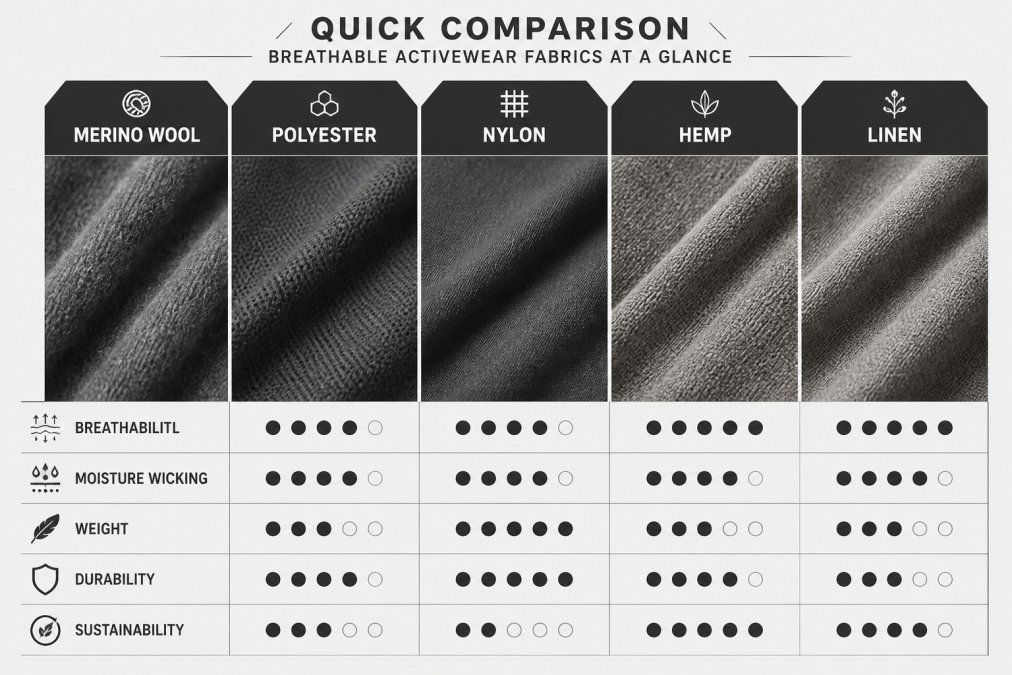
Choosing the right breathable activewear fabrics for hiking can mean the difference between a comfortable summit push and a miserable day on the trail. At Tremendous World, we understand that the best fabric depends on your climate, activity intensity, and how long you'll be out there.
Quick Picks:
- Best Overall Temperature Control: Merino wool, naturally regulates heat across varying conditions
- Best for High-Output Activity: Polyester, rapid drying and durability at an affordable price point
- Best for Durability: Nylon, resists tearing and maintains performance on rugged terrain
- Best for Eco-Conscious Hikers: Hemp, biodegradable and gets softer with every wash
- Best for Hot-Weather Trails: Linen, superior airflow and lightweight structure
The fabrics you choose directly impact your comfort, safety, and how long your gear lasts. Let's break down what makes each one work.
How We Evaluated These Fabrics
We assessed each fabric across five critical performance metrics: moisture-wicking capability, breathability rating, quick-drying speed, durability under trail conditions, and temperature regulation. We also considered how each fabric handles real-world maintenance and whether it suits specific hiking scenarios.
Moisture-wicking refers to how effectively a fabric pulls sweat away from your skin and moves it to the outer surface for evaporation. Breathability measures the fabric's ability to allow air circulation and heat dissipation. Quick-drying capability matters because damp fabric loses insulation and increases chafing risk. Durability reflects how well the fabric resists pilling, tearing, and abrasion from backpack straps and rocky terrain.
Merino Wool: Natural Temperature Regulation for Multi-Day Hikes
Merino wool stands out as a natural fiber engineered by nature for temperature control. Unlike conventional wool, merino has a fine fiber diameter that makes it comfortable against skin while delivering exceptional moisture management. This fabric naturally absorbs moisture without feeling damp, then releases it gradually as conditions change.
Key strengths:
- Naturally antimicrobial, reducing odor even on multi-day trips
- Retains warmth even when slightly damp, critical for variable mountain weather
- Excellent thermoregulation across temperature swings
- Soft texture doesn't itch like coarser wool varieties
Real limitations:
- Less durable than synthetic fibers; prone to pilling after repeated use
- Slower drying than polyester, which matters if you're caught in rain
- Higher price point means replacing worn pieces costs more
Merino wool excels for backpacking trips spanning multiple days where you'll wear the same baselayer repeatedly. Its natural odor resistance means you can wear it longer between washes. The thermoregulation keeps you comfortable whether you're climbing in cool morning air or sitting at camp in the evening.
Polyester: Synthetic Performance for High-Output Activity
Polyester is a hydrophobic synthetic fiber designed to repel moisture rather than absorb it. This fundamental difference from natural fibers makes polyester the fastest-drying option available. The fabric's structure allows moisture to move through it quickly and evaporate from the outer surface, keeping you dry during intense effort.
Key strengths:
- Rapid drying, critical for high-intensity hiking where sweat production is heavy
- High abrasion resistance means your gear lasts through multiple seasons
- Affordable pricing makes replacing worn pieces manageable
- Lightweight construction reduces pack weight on long trails
Real limitations:
- Prone to retaining odors because moisture sits on the fiber surface longer before evaporating
- Not biodegradable, so disposal requires recycling
- Can feel clammy in extreme humidity because moisture doesn't absorb into the fiber
Polyester dominates the high-output hiking market for good reason. If you're pushing hard on a summer trail where sweat management is the priority, polyester's rapid evaporative cooling keeps you comfortable. The durability means a polyester shirt handles rough terrain and repeated washing better than merino.
Nylon: Durability and Wind Resistance for Rugged Terrain
Nylon is a strong synthetic fiber with high tensile strength, meaning it resists tearing and maintains its shape through repeated use. The smooth, friction-reducing texture makes nylon ideal for outer layers and hiking pants where durability matters most. Its excellent wind and water resistance adds protection without bulk.
Key strengths:
- Extremely durable, resists pilling and tearing from rock contact and backpack straps
- Smooth texture reduces friction and chafing during long hikes
- Excellent wind and water resistance for outer-layer protection
- Maintains performance across multiple seasons of heavy use
Real limitations:
- Less breathable than natural fibers, which can cause clammy feeling in extreme heat
- Synthetic origin means it's not biodegradable
- Slower moisture-wicking than polyester, so it's better for outer layers than baselayers
Nylon excels as a hiking pant or outer-layer fabric. Its durability means your gear survives scrambling over rocks and repeated brush contact that would shred merino wool. The wind resistance provides protection on exposed ridges without adding weight. However, nylon's lower breathability makes it less ideal as a baselayer against your skin during high-output activity.
Hemp and Linen: Eco-Friendly Breathability for Warm-Weather Trails
Hemp and linen represent plant-based alternatives to both synthetic and wool options. Hemp comes from the cannabis plant's fiber, while linen derives from flax. Both are naturally antimicrobial and biodegradable, appealing to hikers prioritizing environmental impact. Their breathability rating exceeds most synthetics, making them excellent for hot-weather hiking.
Hemp strengths:
- Biodegradable and sustainable production
- Naturally antimicrobial, reducing odor on shorter trips
- Gets softer with every wash, improving comfort over time
- High breathability for airflow in heat
Hemp limitations:
- Stiffer initial texture requires a break-in period
- Slower drying than polyester or linen
- Less stretch than synthetic blends, potentially limiting movement
Linen strengths:
- Superior cooling effect against skin in hot environments
- Lightweight structure reduces pack weight
- Quick-drying compared to cotton or hemp
- Naturally antimicrobial properties
Linen limitations:
- Prone to wrinkling, which some hikers find acceptable for backcountry use
- Less stretch than synthetic blends
- Requires more careful washing to maintain shape
Both hemp and linen work best for warm-weather, lower-intensity hiking where breathability and cooling matter more than durability or moisture-wicking speed. They appeal to environmentally conscious hikers willing to accept slower drying times. Hemp's softer-with-age characteristic makes it a long-term investment if you commit to the break-in period.
Moisture-Wicking Hiking Clothes: Fabric Blends That Outperform Single Materials
Modern breathable activewear fabrics for hiking often combine two or more fibers to capture the strengths of each while minimizing individual weaknesses. A common blend pairs polyester's rapid drying with merino wool's odor resistance.
Why blends outperform single materials:
- Polyester-merino blends deliver odor control without sacrificing drying speed
- Nylon-polyester combinations provide durability plus breathability
- Hemp-synthetic blends offer sustainability without compromising performance
- Fiber blends distribute stress more evenly, extending garment lifespan
The key to evaluating blends is checking the percentage composition. A 70% polyester, 30% merino blend emphasizes polyester's performance, while a 50-50 split balances both properties. For baselayers, look for blends that prioritize the moisture-wicking fiber.
At Tremendous World, we design our premium activewear using strategic fiber blends. This approach means you're not buying single-purpose gear, each piece works across multiple conditions.
Synthetic vs Natural Hiking Fabrics: Which Wins on the Trail
The synthetic versus natural debate in breathable activewear fabrics for hiking has no single winner. The answer depends on your specific use case, climate, and priorities.
Choose synthetic fabrics when:
- You're doing high-intensity hiking with heavy sweat production
- You need gear that dries quickly after rain or stream crossings
- Durability and multi-season lifespan matter more than environmental impact
- You want affordable options for testing new gear
- You're hiking in warm weather where rapid evaporative cooling is essential
Choose natural fabrics when:
- You're doing multi-day trips where odor resistance matters
- Temperature variability requires thermoregulation across a wide range
- Environmental impact influences your purchasing decisions
- You're hiking at lower intensity where moisture-wicking speed is less critical
- You value the comfort of natural fibers against your skin
The performance difference matters most in extreme conditions. A synthetic baselayer outperforms merino on a hot summer day pushing hard uphill. Merino outperforms synthetics on a cool multi-day backpacking trip where you wear the same shirt for three days. Most hikers benefit from owning both and matching the fabric to the trip.
Fabric Care and Longevity: Making Your Gear Last
How you maintain your breathable activewear fabrics for hiking directly impacts how long they perform.
Merino wool care: Wash in cool water with gentle detergent designed for wool.
Polyester care: Machine wash in warm water with standard detergent. Polyester tolerates higher temperatures than wool.
Nylon care: Wash in cool water to preserve color and elasticity. Avoid fabric softeners, which reduce water resistance.
Hemp and linen care: Wash in cool water with mild detergent. These fabrics shrink slightly in hot water.
The common thread: avoid hot water, skip fabric softeners, and air dry whenever possible.
| Fabric | Best For | Drying Speed | Durability | Price Range | Odor Resistance |
|---|---|---|---|---|---|
| Merino Wool | Multi-day trips, variable weather | Slow | Moderate | Higher | Excellent |
| Polyester | High-intensity hiking, warm weather | Very Fast | High | Lower | Moderate |
| Nylon | Outer layers, rugged terrain | Moderate | Very High | Moderate | Moderate |
| Hemp | Eco-conscious hikers, warm weather | Slow | High | Moderate | Good |
| Linen | Hot-weather trails, low intensity | Fast | Moderate | Moderate | Good |
Frequently Asked Questions
What is the best fabric to wear hiking?
The best fabric depends on your climate and hike duration. Merino wool excels in variable temperatures and multi-day trips because it regulates heat even when damp and resists odors. Polyester performs best in warm weather and high-intensity activity due to rapid moisture evaporation. Nylon provides superior durability for rugged terrain. For hot, dry conditions, linen offers exceptional cooling. Most hikers benefit from fiber blends that combine moisture-wicking properties of synthetics with the comfort of natural fibers.
Is polyester or nylon better for hiking breathability?
Polyester offers better breathability and moisture-wicking for high-output hiking because it's hydrophobic and dries quickly through evaporative cooling. Nylon prioritizes durability and wind resistance over breathability, making it ideal for outer layers and protection rather than base layers. For breathability specifically, polyester wins. For durability on sharp rocks and rough terrain, nylon is superior. Many hikers use both: polyester for moisture-wicking base layers and nylon for protective outer shells.
What material should you avoid when hiking?
Avoid 100% cotton on the trail. Cotton absorbs moisture, dries slowly, and loses insulation when wet, creating dangerous conditions in cool weather. Pure linen, while breathable, wrinkles excessively and lacks stretch, limiting comfort on demanding terrain. Avoid single-fiber materials without moisture-management technology; blends perform better. Also skip fabrics with poor abrasion resistance if hiking rough, rocky trails. Polyester blends that retain odors despite quick-drying properties may feel unpleasant on multi-day trips without access to washing.
How do I care for breathable hiking fabrics to maintain performance?
Wash in cool water with mild detergent and skip fabric softener, which clogs pores and reduces breathability. Air-dry or use low heat to preserve elastic fibers and moisture-wicking coatings. For merino wool, wash separately to prevent pilling and use wool-specific detergent. Polyester and nylon tolerate machine washing but benefit from gentle cycles. Hemp and linen require similar care to cotton but become softer with each wash. Store in dry conditions away from direct sunlight to prevent UV degradation and maintain thermal efficiency.
What makes moisture-wicking hiking clothes different from regular activewear?
Moisture-wicking hiking clothes are engineered with hydrophobic or hydrophilic fibers that pull sweat away from skin and spread it across fabric surface for rapid evaporation, maintaining comfort during sustained exertion. The fiber structure and denier weight are optimized for trail conditions: higher tensile strength resists snagging and abrasion, and thermal efficiency is calibrated for temperature swings on mountains. Regular activewear prioritizes gym aesthetics over durability; hiking fabrics balance breathability rating with durability and weather resistance needed for remote terrain.
Ready to upgrade your hiking wardrobe with gear designed for real-world performance? At Tremendous World, we craft premium athletic lifestyle apparel that moves seamlessly from city streets to mountain trails. Our pieces are engineered with the breathable activewear fabrics and strategic fiber blends that keep you comfortable across every condition. Shop Now and experience apparel built to keep up with your life, wherever it takes you.