 blog
Rhone vs Vuori for Everyday Wear: 2026 Comparison
Table of Contents
- Rhone vs Vuori for Everyday Wear: Quick Comparison
- Fabric and Construction: What You Feel on Day One
- The Most Comfortable Men's Joggers for Everyday Wear
- Vuori Kore Short vs Rhone Mako Short: Which Wins for Daily Use
- Is Rhone Worth the Price? Breaking Down Cost-Per-Wear
- Long-Term Durability and How These Brands Hold Up
- Fit, Sizing, and Layering for Everyday Wear
- Conclusion
- Frequently Asked Questions
Last Updated: September 14, 2026
Rhone vs Vuori for Everyday Wear: Quick Comparison
Rhone vs Vuori for everyday wear comes down to a simple split: Rhone builds for performance-first wardrobes, while Vuori leans into a softer, lifestyle-driven feel. This guide from Tremendous World breaks down fabric, fit, durability, and cost-per-wear so you can pick the right pair of commuter pants or joggers without guessing. Both brands earn their reputations, but they solve different problems.
Here's the short version. Rhone favors structured technical fabric with a more athletic cut. Vuori favors a plush, broken-in hand-feel that works better for lounging and light activity. If you split your week between an office and the gym, that difference matters more than any logo.
| Factor | Rhone | Vuori |
|---|---|---|
| Fabric feel | Structured, technical | Soft, brushed |
| Best for | Training and commuting | Lounging and light days |
| Fit profile | Athletic, tapered | Relaxed, true-to-size |
| Durability focus | Seam and stretch retention | Fabric softness over time |
| Style aesthetic | Technical | Coastal |
Fabric and Construction: What You Feel on Day One
Fabric is where these two brands diverge fastest. Rhone leans on synthetic blends engineered for moisture-wicking and four-way stretch, so the garment holds its shape through movement. Vuori uses a softer brushed knit that feels great immediately but shows its wear differently over time.
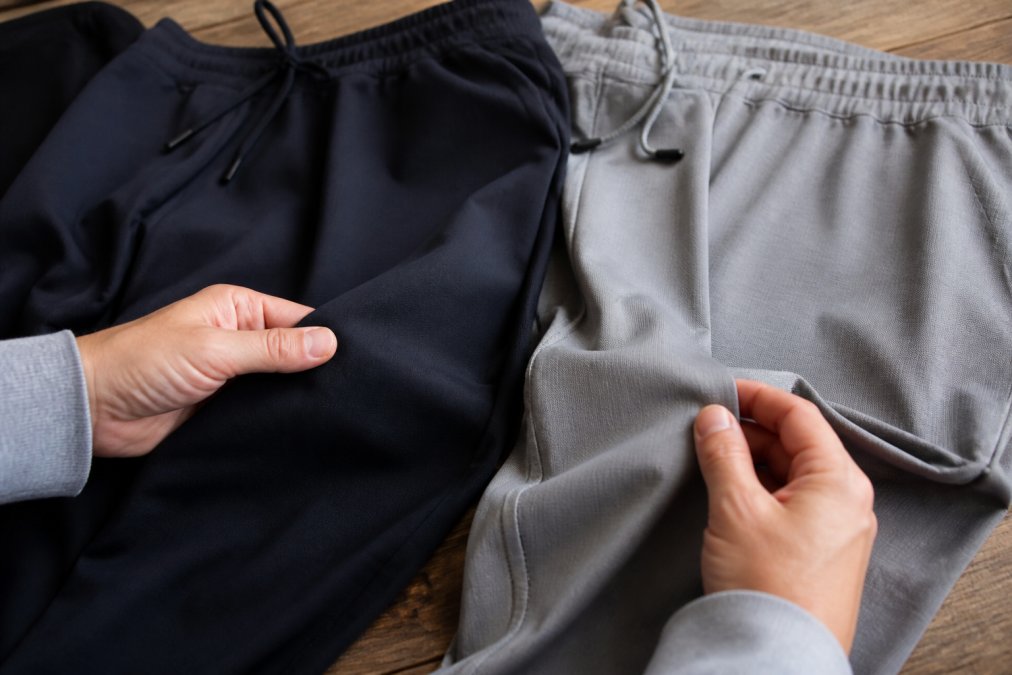
Look at seam construction and you'll notice the real gap. Flatlock seams reduce chafing on long days, and reinforced gussets matter if you're moving between a desk and a trailhead. Many buyers focus on softness and ignore this, then wonder why a pair pills after a season.
- Breathability: Rhone's technical fabric moves air better during activity
- Hand-feel: Vuori wins on day-one softness
- Pilling resistance: Both vary by specific style, so check the exact fabric blend
- Wrinkle resistance: Rhone's structured knits travel better
The takeaway: match the fabric to your actual routine, not the marketing copy.
The Most Comfortable Men's Joggers for Everyday Wear
The most comfortable men's joggers for everyday wear balance three things: a tapered fit that doesn't bag out, a waistband that stays put, and fabric that regulates temperature across a full day. No single brand owns all three, which is why the answer depends on your routine.
Vuori's joggers feel like a favorite hoodie you can wear in public. The brushed interior is genuinely comfortable for remote work and errands. Where they fall short is structure. On a long commute or a brisk walk, the softer knit can feel less supportive than a technical alternative.
Rhone's joggers trade some of that plushness for ergonomic design and a cleaner athletic cut. They look sharper in business casual settings and handle a quick workout without a change. The trade-off is that they feel less like loungewear on a lazy Sunday.
For a capsule wardrobe, the smart move is owning one of each rather than forcing a single pair to do everything.
Vuori Kore Short vs Rhone Mako Short: Which Wins for Daily Use
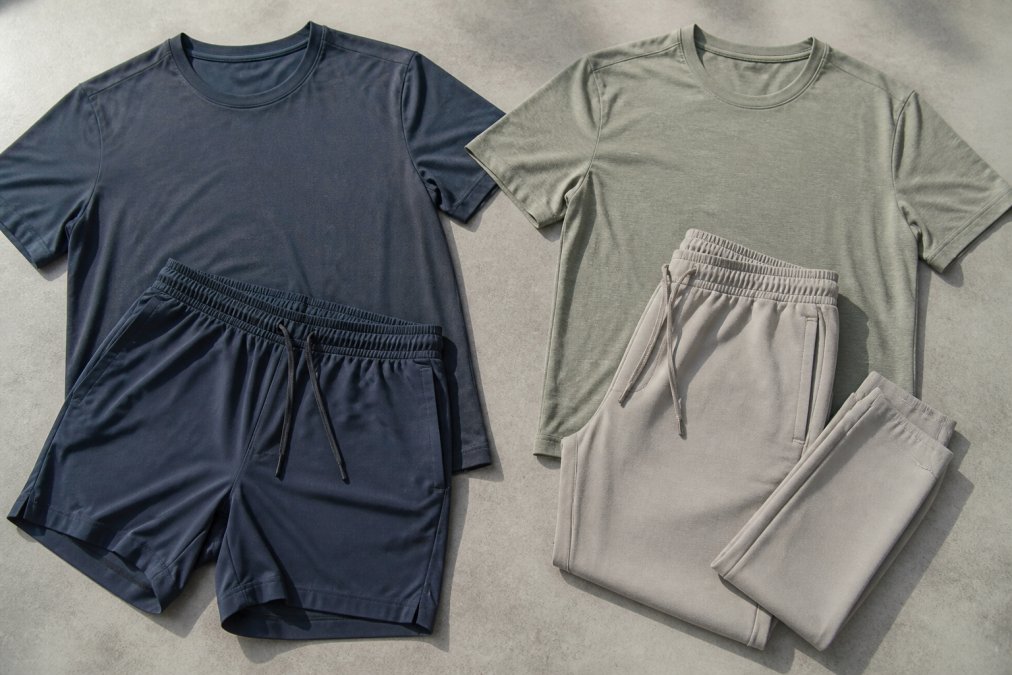
Vuori Kore short vs Rhone Mako short is the matchup most people search for, and the winner depends on the setting. The Kore short is the better pick for casual, everyday wear. The Mako short is the better pick when your day includes real training. That split holds up once you look at how each short is actually built, not just how it feels on the rack.
Start with the liner. The Kore short is built around a boxer-brief liner with a phone pocket, which is the single biggest reason it works as an everyday short, you can leave the house without a separate base layer and still carry a phone on a walk or a coffee run. The Mako short uses a built-in liner as well, but the cut and fabric are tuned for movement and sweat management rather than all-day lounging. If you hate liners, both brands offer unlined versions of each short, and that choice matters more than the logo.
Inseam and silhouette drive the rest of the difference. The Kore short sits in a relaxed, mid-thigh range that reads coastal and casual, it pairs with a tee and sneakers without looking like gym kit. The Mako short runs shorter and more athletic, with a tapered leg opening that reads technical. On a 5'9" frame, the Kore short hits mid-thigh; the Mako short sits higher and looks more like a training short. Taller wearers often size up in the Mako to avoid the short-short look.
Fabric behavior over a full day is where the two diverge most:
- Moisture: The Mako short's synthetic blend moves sweat and dries fast, so it survives a lunchtime workout and an afternoon of errands without feeling damp. The Kore short's brushed knit feels great dry but holds moisture longer after real exertion.
- Structure: The Mako short keeps its shape through repeated washes and doesn't bag at the seat. The Kore short softens with wear, which is comfortable but less flattering after a long day.
- Hand-feel: The Kore short wins on day-one softness. The Mako short feels more like performance gear against the skin.
- Wrinkle resistance: The Mako short travels better in a carry-on. The Kore short creases if it's stuffed in a bag.
Use cases, ranked by how often people actually reach for each:
- Choose Kore if: you want one short for remote work, errands, light hikes, and casual dinners; you value the liner phone pocket; you prefer a relaxed coastal look.
- Choose Mako if: your day includes a real workout, a run, or a hot commute; you want a short that dries fast and holds shape; you prefer a sharper athletic silhouette.
- Skip both if: you need a short for a business-casual or formal setting, neither reads dressy, and a structured chino short is the better call.
A common pattern among long-term owners is owning one of each: the Kore short for weekends and travel, the Mako short for training days and hot-weather commutes. That pairing covers more of an everyday wardrobe than forcing a single short to do both jobs.
Is Rhone Worth the Price? Breaking Down Cost-Per-Wear
Is Rhone worth the price? For frequent wearers, yes. For occasional wearers, probably not. Cost-per-wear is the honest way to judge premium activewear, and it flips the sticker-price conversation entirely, but only if you ground it in how the fabric actually ages, not just how it feels on day one.
The mechanism is simple. Premium activewear costs more up front because the fabric blend and seam construction are built to survive more wash cycles before they lose shape, stretch recovery, or color. A cheaper pair that pills or bags out in a season gets replaced sooner, so its per-wear cost climbs even though the sticker price was lower. The premium pair only wins that math if you actually wear it often enough to spread the cost.
Here's how to run the numbers honestly:
- Estimate wears per month (be honest, most people overestimate)
- Divide the price by expected wears over two years
- Compare that figure to a cheaper alternative you'd replace sooner
- Factor in how often you'd reach for it versus a cheaper pair
- Add the cost of a replacement if the cheaper pair fails inside a year
A worked example makes the point. If a premium short costs roughly three times a budget pair but lasts through three times the wears before pilling, the per-wear cost lands in the same range, and you spent fewer shopping trips replacing it. If you only wear it a few times a month, that advantage disappears and the budget pair wins on pure economics.
What actually drives longevity, and therefore cost-per-wear, comes down to three things: fabric blend, seam construction, and how you wash it. Cold water and air drying extend the life of both brands considerably. Heat is the enemy of stretch fibers, and it's the fastest way to shorten a garment's usable life. A premium pair washed hot and tumble-dried will fail faster than a budget pair washed cold and hung to dry, the care routine matters as much as the price tag.
FTC guidance on textile labeling and care requires accurate fiber content and care instructions on apparel, so check the tag rather than guessing. That label tells you more about long-term performance than any product page.
For a long-term wear-and-tear check, inspect these spots before you decide a pair has failed:
- Inner thighs: first place pilling appears on softer knits
- Waistband: elastic fatigue shows up here first
- Seams: look for loose stitching before it becomes a hole
- Knees: bagging indicates lost stretch recovery
Buying premium gear you rarely wear is the most common mistake in this category. If you're honest about your wear frequency, the cost-per-wear math usually points to one clear answer, and it's rarely the one the marketing copy suggests.
Long-Term Durability and How These Brands Hold Up
Durability is where marketing claims meet reality. Both brands hold up well under normal use, but they fail in different ways. Rhone tends to keep its structure and stretch, while Vuori's softer knits can show pilling and thinning at high-friction points.
Garment longevity comes down to three things: fabric blend, seam construction, and how you wash it. Cold water and air drying extend the life of both brands considerably. Heat is the enemy of stretch fibers, and it's the fastest way to shorten a garment's usable life.
FTC guidance on textile labeling and care requires accurate fiber content and care instructions on apparel, so check the tag rather than guessing. That label tells you more about long-term performance than any product page.
For long-term wear-and-tear, inspect these spots:
- Inner thighs: first place pilling appears on softer knits
- Waistband: elastic fatigue shows up here first
- Seams: look for loose stitching before it becomes a hole
- Knees: bagging indicates lost stretch recovery
Treat a premium pair well and it rewards you. Treat it like a disposable and it won't.
Fit, Sizing, and Layering for Everyday Wear
Fit is the single biggest reason people return premium apparel, and both brands run differently. Rhone tends to run with a more athletic cut, so sizing up is common for broader builds. Vuori generally runs truer to size with a more relaxed fit profile.
Layering compatibility matters if you live in a variable climate. A technical base layer under a structured short works well for cool mornings that turn warm by afternoon. Softer knits layer comfortably under a hoodie but can bunch under a fitted jacket.
ASTM standards for apparel sizing and fit give brands a reference point, but real-world fit still varies by style. Always check the specific product's size chart instead of assuming a brand-wide fit.
For thermal regulation across seasons, aim for:
- A breathable base layer for warm days
- A midweight option for shoulder seasons
- A structured outer layer for cold mornings
If you're a bigger guy, order two sizes and return the one that misses. Fit is everything, and guessing wastes a week.
Conclusion
Choosing between these two brands isn't about finding a winner. It's about matching fabric, fit, and durability to how you actually live. If you want one wardrobe that moves from a city commute to a mountain trail without a change, Tremendous World builds exactly that: premium athletic lifestyle apparel and streetwear designed for people who move between both. Our gear is made for versatility across city and outdoor environments, and it's built to keep up with an active lifestyle rather than sit in a drawer. Shop now and find pieces that work as hard as your week does.
Frequently Asked Questions
Which brand is better for everyday comfort, Rhone or Vuori?
Vuori leans softer with a brushed, four-way stretch fabric that feels broken-in from day one, making it a favorite for lounging and casual errands. Rhone uses denser, more structured technical fabrics that hold their shape through workouts and commutes. If you prioritize next-to-skin softness for all-day wear, Vuori edges ahead. If you want a polished look that transitions from gym to office without wrinkling, Rhone is the stronger pick.
Is Rhone worth the price for daily wardrobe staples?
Rhone offers premium activewear, and the construction and fabric weight are designed for frequent wear. Cost-per-wear can be favorable for pieces that last through many uses. If you rotate through cheaper options that lose shape after a few months, the upfront cost of premium items may offer better value over time. Check current pricing on their site before committing.
How do Rhone and Vuori compare in terms of fabric durability?
Rhone's synthetic blends typically resist pilling and fading better after repeated washing, especially in shorts and joggers meant for training. Vuori's softer fabrics feel better initially but can show wear sooner at high-friction points like inner thighs and waistbands. Both brands hold up well if you wash cold and air dry. For heavy rotation and outdoor use, Rhone generally outlasts Vuori in long-term wear tests.
Vuori Kore short vs Rhone Mako short: which works better for everyday wear?
The Vuori Kore short has a relaxed, liner-free design that works for lounging, errands, and light workouts, with a softer hand-feel. The Rhone Mako short uses a more structured, quick-dry fabric with a tailored cut that looks sharper for casual office settings or post-gym social plans. If your day is mostly low-impact and comfort-first, go Kore. If you need one short that handles a workout and then dinner, go Mako.