 how-to
What to Look For in Versatile Activewear for Daily Grind
Table of Contents
- The Daily Grind Demands More From Your Activewear
- Fit, Silhouette, and Body-Type Versatility: What Actually Matters
- How to Style Activewear for Everyday Use: Gym to Street to Dinner
- Best Versatile Clothes for Travel: Packing a Capsule Wardrobe That Works Anywhere
- Durability, Care, and Wash-Cycle Longevity: Making Your Investment Last
- What to Ignore When Shopping for Versatile Activewear
- Conclusion: Building a Versatile Activewear Wardrobe That Earns Its Place
- Frequently Asked Questions
Last Updated: October 5, 2026
The Daily Grind Demands More From Your Activewear
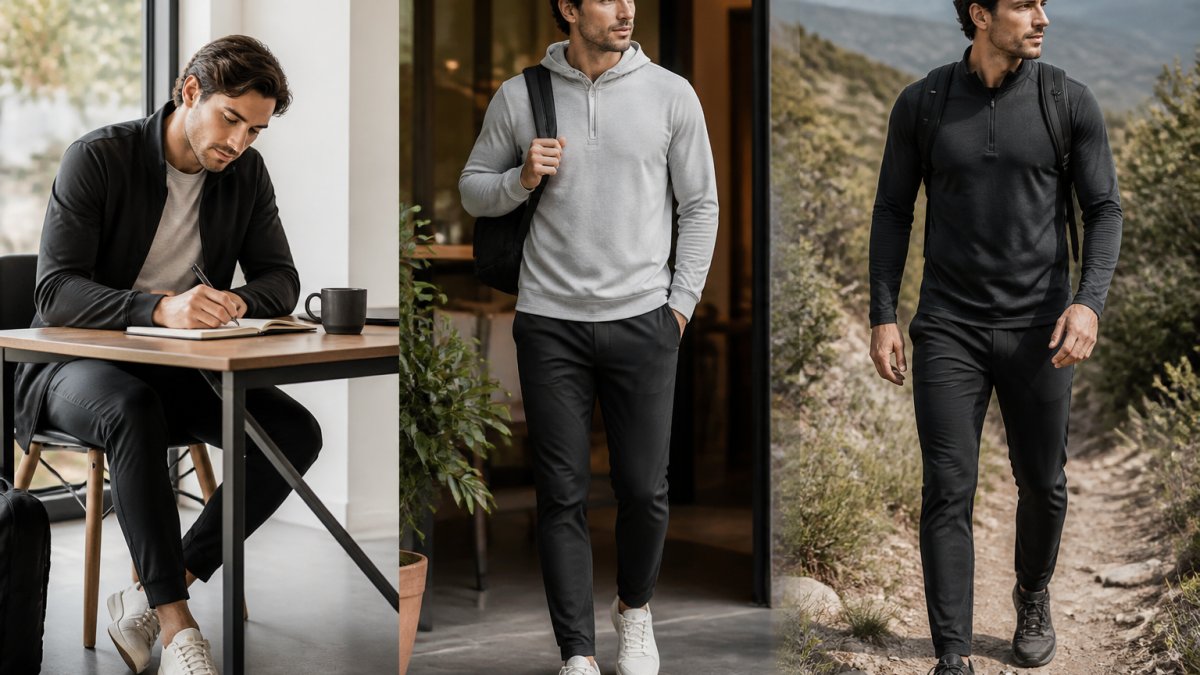
Your commute, your workout, your post-work errands, and dinner with friends all happen in the same eight hours. Activewear that only performs in one of those settings wastes money and closet space. At Tremendous World, we build premium athletic lifestyle apparel for people who move between city streets and mountain trails.
Most shoppers evaluate activewear on look and price alone. That is backwards.
How to Read a Fabric Label Without a Chemistry Degree
Fabric composition tells you more than any marketing claim. Look for nylon or polyester blended with spandex, usually between 10 and 20 percent, because that ratio delivers four-way stretch and shape retention.
- Nylon blends: softer hand feel, better for daily wear
- Polyester blends: faster drying, better for high-sweat activity
- Spandex content: anything under 8 percent will sag by month three
If a label lists cotton first and spandex last, that garment is loungewear pretending to be performance gear.
Odor Resistance and Quick-Drying: The Two Tests That Separate Real Performance Gear From Gym Cosplay
Two questions expose weak activewear fast. Does it dry within an hour of a wash cycle? Does it still smell neutral after a full day of wear?
Many brands treat odor resistance as a coating added at the end of production. Coatings wash out. Look for fabric construction that manages moisture at the fiber level, and check whether the brand says anything specific about how odor control works.
Fit, Silhouette, and Body-Type Versatility: What Actually Matters
The right fit lets you squat, reach overhead, and sit through a two-hour meeting without adjusting anything. Silhouette matters as much as stretch, because a garment that fits your body but not your proportions will still look wrong.
Ergonomic Fit and Four-Way Stretch: Testing Range of Motion Before You Buy
Test range of motion before you commit. Raise both arms overhead, then squat to the floor. If the waistband rolls or the shoulders pull, the pattern was not cut for movement.
Four-way stretch means the fabric stretches in both directions, not just across. That difference shows up in lunges and overhead presses, where two-way stretch binds and four-way stretch does not.
Finding Brands That Actually Carry Extended Sizes
Size availability is where premium activewear most often fails. A brand can claim inclusive sizing and still cut every piece from the same narrow block.
Check the size chart for actual measurements, not just S through XL labels. Look for hip and inseam measurements listed separately. If a brand only lists waist size, the fit will be inconsistent across body types.
How to Style Activewear for Everyday Use: Gym to Street to Dinner
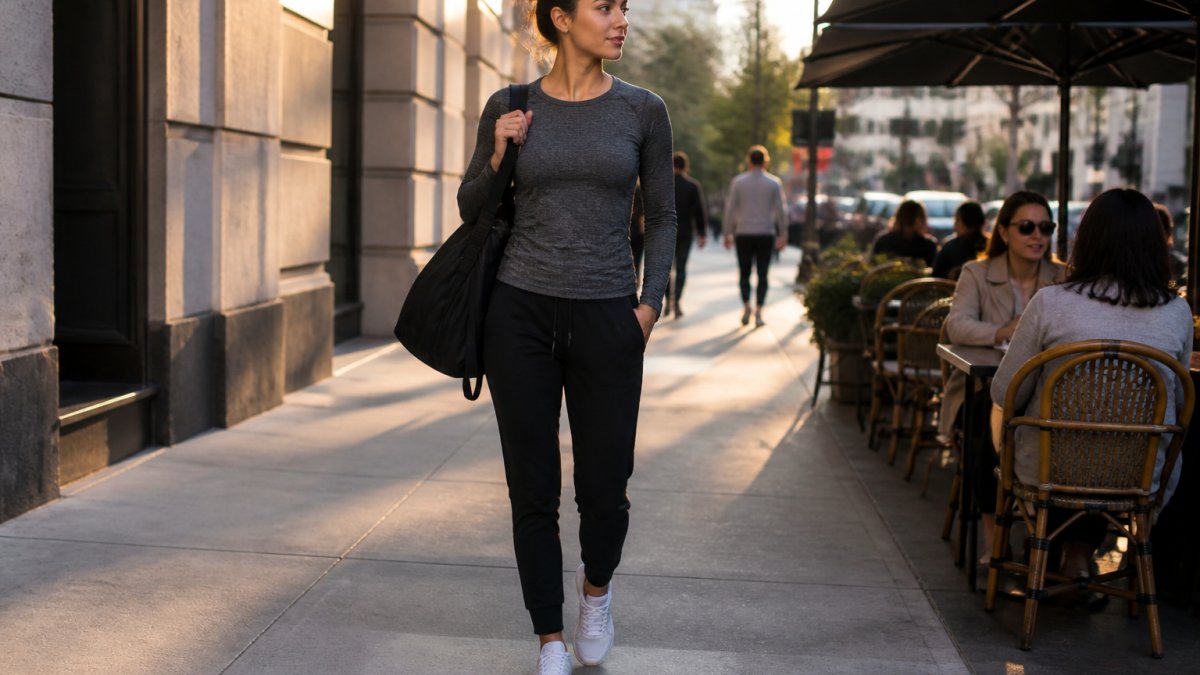
Styling activewear for everyday use starts with one rule: keep the silhouette clean and let one performance piece carry the outfit. A technical jogger with a plain tee reads casual. The same jogger with a structured overshirt reads intentional.
Layering and the Day-to-Night Transition
Layering is how a single outfit survives a full day.
The day-to-night transition works when your base layer looks like a normal shirt. Crew necks in solid colors, no visible branding, and a hem that hits at the hip all read as everyday clothing.
Three mechanical details do most of the work here:
- Fabric sheen. Matte finishes read as streetwear; high-gloss finishes read as gym. If a piece catches light like a swimsuit, it will not pass at dinner.
- Seam placement. Flatlock seams and raglan sleeves look intentional. Contrast stitching and exposed elastic waistbands look athletic.
- Hardware. Zippers, drawcords, and toggles should be tonal or hidden. A reflective pull tab is a giveaway.
A practical test: photograph the outfit in daylight, then look at it on a phone screen.
Professional Dress Code Navigation: Making Athleisure Work in Business Casual Settings
This is where most guides stop at 'no leggings, no logos.' That advice is correct but incomplete. Passing as business casual is a system, not a checklist.
Start with your written policy. Many workplaces have relaxed dress codes in recent years, but 'relaxed' still means structured. The Society for Human Resource Management guidance on workplace dress codes explains how policies are typically written and why 'business casual' is defined by the employer, not the employee.
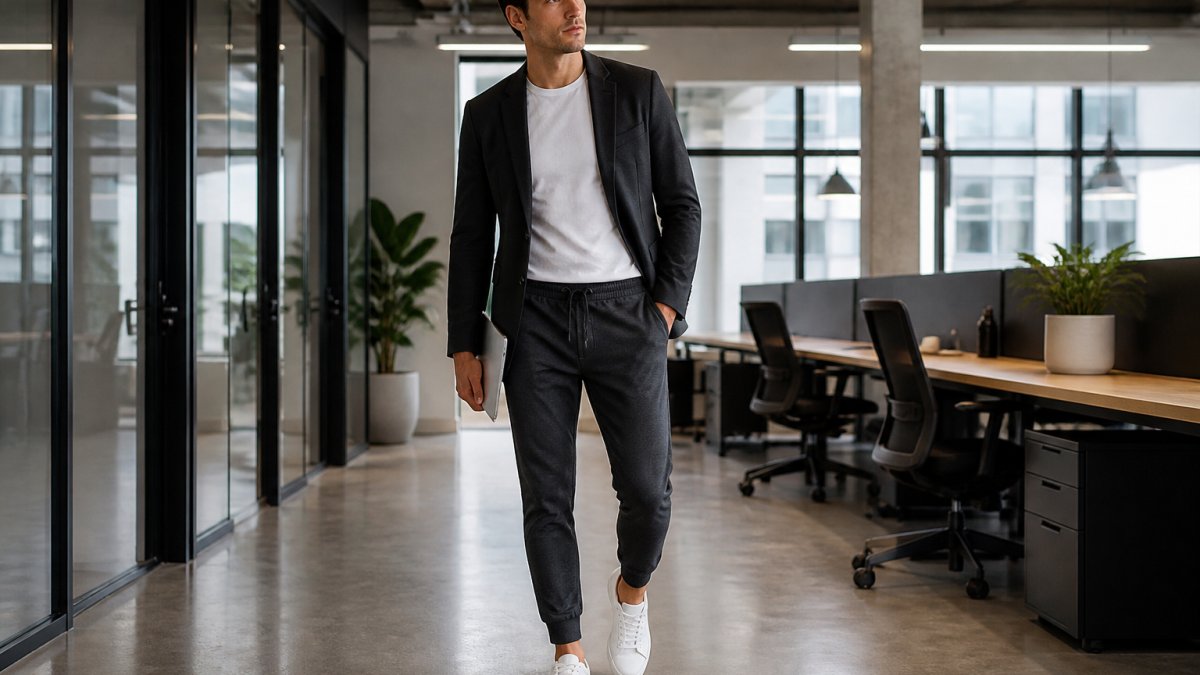
Build the outfit around one 'anchor' garment. An anchor is a piece that is unambiguously business casual: a technical trouser with a pressed crease, a knit blazer, or a structured midi skirt.
Swap the four tells. These are the details that out an outfit as activewear:
| Athletic tell | Business-casual swap |
|---|---|
| Leggings as pants | Technical trouser or ponte pant with a crease |
| Visible logo on chest or thigh | Tonal or hidden branding |
| Running sneaker with mesh upper | Clean leather or knit sneaker in a single color |
| Hoodie with drawstrings | Knit polo, fine-gauge crew, or structured overshirt |
Match the shoe to the floor. A clean leather sneaker works in most offices.
Know the ceiling. Some environments, client-facing finance, law, formal healthcare, will not accept athleisure no matter how well it is styled. In those settings, versatile activewear belongs in your commute and your off-hours, not your meetings. That is not a failure of the garment; it is a mismatch of context.
Best Versatile Clothes for Travel: Packing a Capsule Wardrobe That Works Anywhere
Most guides treat the travel capsule and the workweek capsule as two different problems. They are the same problem. If five pieces can cover five days on the road, they can cover five days at home, and that is the version of versatility most shoppers actually need.
The Five-Piece Workweek Capsule
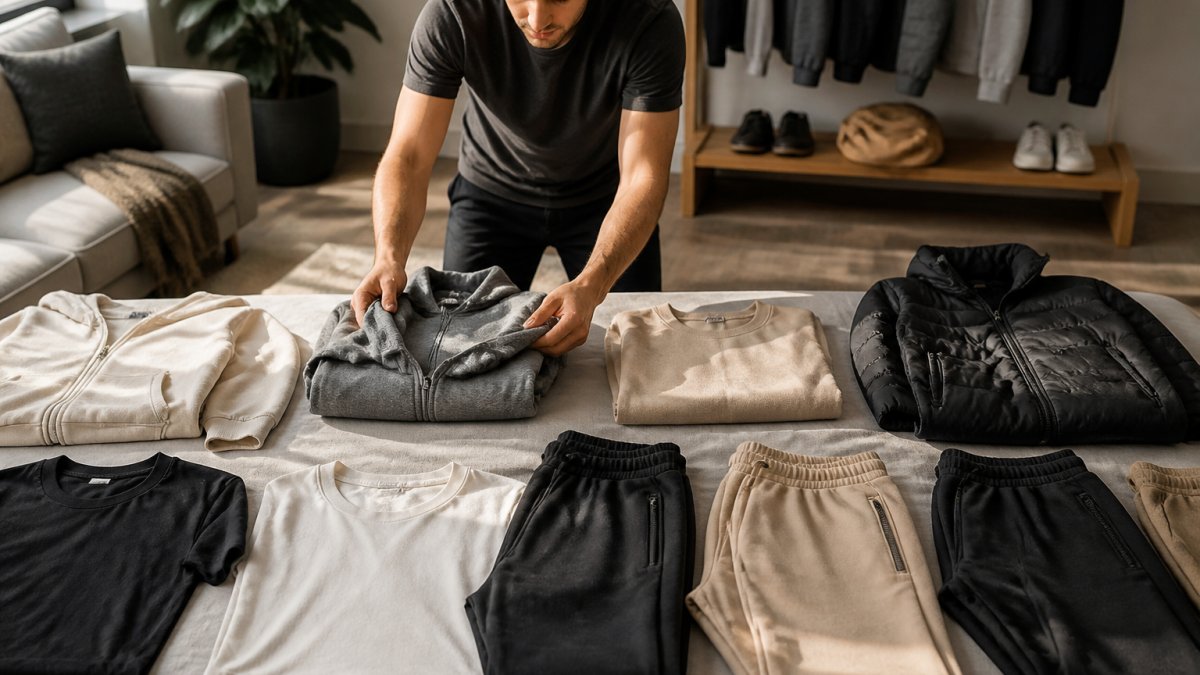
Build around five garments that all match each other. The formula: three tops, two bottoms, one mid-layer, one outer layer, one shoe. That is eight items if you count the layer and shoe, but the core capsule is five pieces of clothing you rotate.
| Item | Quantity | Why it earns its place |
|---|---|---|
| Moisture-wicking tee | 3 | Layers under everything, dries overnight, works as a base under a blazer |
| Technical jogger or trouser | 2 | One tapered for the office, one relaxed for off-hours |
| Mid-layer pullover | 1 | Handles temperature swings on transit and in over-air-conditioned offices |
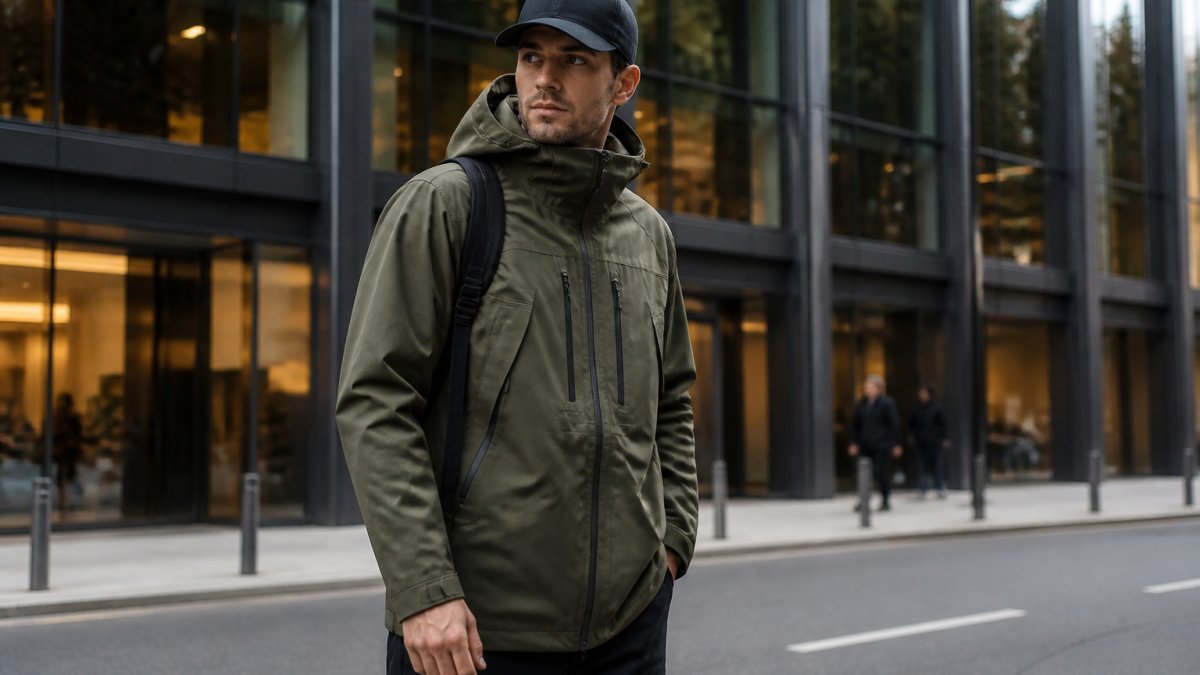
| Packable jacket | 1 | Wind and light rain protection without bulk |
| Clean sneaker | 1 | Covers walking, transit, and casual dining |
Every piece should match every other piece. Stick to two neutral colors plus one accent, and you can build fifteen outfits from five garments.
How to Map the Capsule to a Five-Day Week
The capsule only works if you plan the rotation, not just the packing list. A common pattern:
- Monday: Technical trouser + tee + mid-layer. Anchor piece carries the meeting.
- Tuesday: Same trouser, different tee, jacket instead of mid-layer. Reads as a new outfit because the outer layer changed.
- Wednesday: Relaxed jogger + tee + mid-layer. Midweek reset, still presentable for casual settings.
The trick is that the tops do the visual work and the bottoms do the structural work. Two bottoms, three tops, and two layers give you enough combinations that no one notices the rotation.
Why This Beats a 'Travel-Only' Capsule
A travel capsule is judged on one trip. A workweek capsule is judged on fifty weeks. That changes what you should buy:
- Durability matters more. A piece that sags after ten washes fails the workweek test even if it survived a weekend trip.
- Neutrality matters more. A travel capsule can lean on one bold piece. A workweek capsule needs every piece to work with every other piece, which pushes you toward solids and tonal palettes.
- Fit matters more. You will sit in these pieces for eight hours, not two. Test the waistband and shoulder seam in a seated position before you commit.
The One-Bag Test
Before you buy, run the one-bag test: can all five core pieces plus a layer and a shoe fit in a single carry-on with room for a laptop and toiletries? If not, one of your pieces is too bulky or too specialized. Versatility is measured in cubic inches as much as in styling range.
Durability, Care, and Wash-Cycle Longevity: Making Your Investment Last
Performance fabric fails in predictable ways. Pilling, loss of stretch, and fading all trace back to how you wash the garment.
Anti-pilling finishes and shape retention come from the knit structure, not from detergent. A well-made piece should hold its shape through dozens of wash cycles.
The Federal Trade Commission's guidance on textile care labeling explains what care instructions manufacturers are required to provide, which is worth checking before you buy anything you plan to wash weekly.
What to Ignore When Shopping for Versatile Activewear
Ignore the marketing language. "Performance" and "technical" appear on garments that are neither. Ignore celebrity endorsements, which tell you about a brand's budget rather than its fabric.
Ignore deep discounts on unfamiliar brands without checking the return policy first.
What should you actually weigh? Fabric composition, size chart detail, care requirements, and return terms. Those four factors predict satisfaction better than any badge on the label.
Conclusion: Building a Versatile Activewear Wardrobe That Earns Its Place
Building a wardrobe that survives the daily grind means choosing fewer pieces and choosing them well. The pieces that earn their place are the ones that dry fast, hold their shape, and look right in more than one setting. Tremendous World designs premium athletic lifestyle apparel for exactly that kind of day, from city streets to mountain trails, with streetwear cuts built for movement and comfort.
Frequently Asked Questions
What features make activewear suitable for all-day wear?
The features that matter most for all-day wear are moisture-wicking fabric, four-way stretch, and odor resistance. Moisture-wicking fabric pulls sweat away from your skin so you stay dry through a commute, a workout, and an evening out. Four-way stretch lets the garment move with you without losing shape. Odor-resistant treatments keep the piece fresh enough to wear between washes. Look for seamless construction too, since flat seams reduce chafing during long days. Breathable fabrics and quick-drying properties round out the checklist. If a piece checks these boxes, it can handle the daily grind without needing a change.
How do you style athletic apparel for professional settings?
Start with dark, solid colors and clean silhouettes. A well-fitted performance polo or a structured quarter-zip in black, navy, or charcoal reads more like business casual than gym gear. Pair it with tailored joggers or chinos that have four-way stretch, and finish with minimalist sneakers or loafers. Avoid visible logos, loud patterns, and overly relaxed fits. Layering helps: a blazer over a moisture-wicking base layer looks intentional rather than sloppy. The key is choosing pieces with functional design that prioritize clean lines over high-impact athletic detailing. Stick to versatile staples that could pass in a casual office.
What fabrics are best for moisture-wicking and comfort?
Synthetic blends lead for moisture-wicking: polyester, nylon, and spandex combinations move sweat to the surface where it evaporates quickly. Merino wool is another strong option because it regulates temperature and resists odor naturally, though it costs more. Look for fabrics labeled quick-drying and odor-resistant. Avoid 100% cotton for high-sweat activities because it holds moisture and gets heavy. The best versatile activewear uses technical textiles that blend synthetic fibers for performance with a soft hand feel for comfort. Anti-pilling finishes and shape retention matter too, since they keep the fabric looking new after repeated wash cycles.
How can you tell if activewear is high quality?
Check three things: fabric weight, seam construction, and shape retention after washing. Quality activewear uses mid-to-heavyweight technical textiles that feel substantial, not paper-thin. Flatlock or seamless construction prevents chafing and signals better build quality. Squeeze the fabric and release it; if it springs back immediately, it has good shape retention and four-way stretch. Read care labels for anti-pilling finishes. Also test odor resistance by wearing the piece for a workout and letting it sit overnight before washing. If it still smells fresh, the odor-resistant treatment is doing its job.