 how-to
How to Transition Your Capsule Wardrobe Between Seasons
Table of Contents
- Assess Your Current Wardrobe and Seasonal Needs
- Build a Capsule Wardrobe for All Seasons
- Master Capsule Wardrobe Layering Essentials
- Execute Your Summer to Fall Wardrobe Transition
- Use a Seasonal Wardrobe Swap Checklist
- Store and Rotate Seasonal Pieces Strategically
- Optimize Your Transition Budget and Shop Smart
- Frequently Asked Questions
Last Updated: October 17, 2026
Assess Your Current Wardrobe and Seasonal Needs
Before you learn how to transition your capsule wardrobe between seasons, take inventory of what you actually wore. Pull out last season's pieces and note what stayed in rotation versus what sat untouched.
Next, evaluate your climate and daily demands, office, home, gym, trails, or city streets. Your transition strategy depends on how you actually move through your day.
Document the gaps. Maybe you reached for one sweater repeatedly while others collected dust, or needed lightweight layers you never grabbed. These patterns reveal what to keep, replace, and add when you transition your capsule wardrobe between seasons.
Note which neutrals and accent colors you gravitated toward, this guides your shopping later.
Build a Capsule Wardrobe for All Seasons
A year-round wardrobe doesn't mean owning everything at once. It means pieces that work across seasons through smart layering and fabric choices: your foundation stays constant, seasonal pieces rotate in and out.
Start with core wardrobe staples that work in every season:
- Neutral-colored basics in versatile cuts
- High-quality basics in cotton, merino wool, or synthetic blends
- Fitted and relaxed silhouettes that layer well
- Neutral outerwear that transitions between seasons
- Comfortable everyday shoes in neutral tones
Seasonal pieces rotate: lightweight layers in summer, heavier layers over the same basics in fall and winter. Choose seasonal pieces that coordinate with your core wardrobe rather than requiring a separate closet.
For an active lifestyle that moves between city and outdoor environments, your capsule wardrobe should emphasize versatile basics that perform in multiple contexts. Tremendous World's premium athletic lifestyle apparel is built for exactly this kind of transition, pieces that work during your morning commute, through your workout, and into evening plans without requiring a complete outfit change.
Master Capsule Wardrobe Layering Essentials
Layering is the secret to adapting a capsule wardrobe to changing temperatures, the same base pieces work year-round by adding or removing middle and outer layers.
Your layering system needs three tiers:
Base layer: Fitted, moisture-wicking pieces that sit directly on skin. These stay constant year-round, lightweight in summer, merino wool or synthetic blends in colder months.
Mid-layer: The versatile pieces that trap warmth or add visual interest. Lightweight fleece, button-ups, cardigans, and fitted sweaters work here. These are your transition pieces.
Outer layer: Jackets and outerwear that protect from weather. A lightweight jacket works spring through fall. A heavier coat handles winter.
The magic happens when these layers coordinate: base layers work under everything, mid-layers pair with multiple outer layers, and outer layers work over multiple combinations.
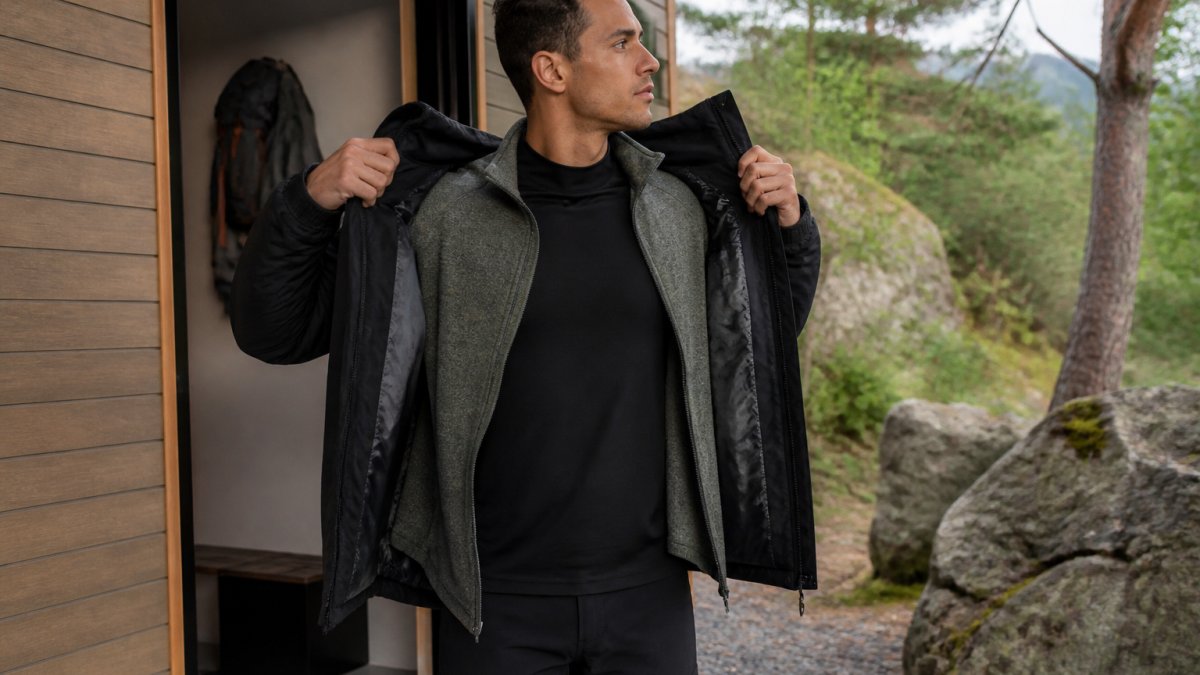
Choose fabrics that layer well without bulk. Merino wool, cotton blends, and technical synthetics compress and move with your body. Avoid heavy knits that create volume when layered.
Test combinations before committing: wear your base layer with different mid-layers and outer layers and see what fits without restricting movement, especially when your lifestyle demands both gym performance and professional appearance.
Execute Your Summer to Fall Wardrobe Transition
A summer to fall wardrobe transition typically happens in late August or early September when temperatures start dropping but summer heat still lingers. This is the trickiest seasonal shift because you need pieces that work in both conditions.
Swap your lightest pieces for slightly heavier alternatives: thin tank tops for fitted t-shirts, cotton shorts for lightweight pants. Keep lightweight outerwear accessible and layer it over warmer bases.
Introduce mid-weight layers gradually, a lightweight sweater or open long-sleeved shirt over a t-shirt extends existing pieces into the new season.
Watch fabric weight: fall pieces should still breathe but provide more coverage. Linen transitions to cotton, cotton to slightly heavier cotton blends.
Your color palette can shift subtly, summer brights and whites give way to deeper earth tones, but your neutrals stay the same, which is why a strong neutral foundation matters.
During this transition, keep both seasonal wardrobes accessible for 2-3 weeks. You'll grab what matches the day's weather. Once temperatures stabilize, pack away your summer-only pieces.
Use a Seasonal Wardrobe Swap Checklist
This checklist turns the transition into a repeatable, decision-driven routine you can run in about 90 minutes at the start of each season. Work through the steps in order; each has a clear decision point.
Step 1, Set the trigger date (10 minutes). Don't rotate on a fixed calendar date. Rotate when the 10-day forecast shows daytime highs consistently within 10°F of your target season's range and nighttime lows no longer drop below your lightest layer's comfort zone.
Step 2, Pull and sort last season's active pieces (20 minutes). Empty the active side of your closet onto the bed. Sort into three piles: wore weekly, wore occasionally, never wore.
Step 3, Run the fit-and-condition check (15 minutes). For every piece in the wore-weekly and wore-occasionally piles, check seams at stress points, hem and cuff wear, pilling or thinning, and fit. Decide keep, repair, or retire.
Step 4, Identify genuine gaps (10 minutes). Compare what you wore weekly against what you are about to rotate in. A gap exists only when you can name a specific outfit you could not build. "I need more sweaters" is not a gap.
Step 5, Wash, dry, and inspect before storage (20 minutes). Wash or dry-clean every piece per its care label and dry it completely before binning. Check pockets, zip zippers, and button buttons.
Step 6, Rotate storage to active closet (15 minutes). Bring in-season pieces out, let them air for a few hours, and hang or fold them into the active side.
Step 7, Run a two-week trial, then decide (ongoing). After two weeks, anything you did not reach for goes back into storage or into the donate pile.
| Step | Time | Decision point |
|---|---|---|
| 1. Set weather trigger | 10 min | 10-day forecast within 10°F of target range |
| 2. Pull and sort | 20 min | Weekly / occasional / never |
| 3. Fit and condition check | 15 min | Keep / repair / retire |
| 4. Identify gaps | 10 min | Name the missing outfit, not the product |
| 5. Wash and inspect | 20 min | Clean and dry before storage |
| 6. Rotate storage | 15 min | Two-week overlap window |
| 7. Two-week trial | Ongoing | Reach-for test decides keep or store |
Store and Rotate Seasonal Pieces Strategically
Storage is where capsule wardrobes quietly fail: a badly stored piece comes out wrinkled, musty, moth-nibbled, or discolored and gets replaced. The fix is a storage system built around fabric type and climate.
Clean before storage, every time, no exceptions. Body oils, deodorant residue, and food particles are invisible at first and become permanent yellow stains or pest attractants over months.
Match the storage method to the fabric. Fold knits, hanging stretches shoulders. Hang structured pieces on broad wooden or padded hangers. Roll t-shirts and lightweight layers. Never store wool or silk in airtight plastic; use breathable cotton canvas bags or cedar-lined boxes.
Control pests without mothball smell. Cedar blocks or sachets in storage containers deter moths; refresh them yearly by lightly sanding the surface. Lavender sachets work as a secondary deterrent.
Climate-specific storage. In humid climates, add a reusable silica gel desiccant pack to each bin and check monthly. In dry climates, use lidded bins against dust. With large temperature swings, store in an interior closet rather than an attic, garage, or basement.
Label and inventory. Label each bin by season and category ("Fall mid-layers," "Summer bottoms") and tape a printed or handwritten inventory list to the lid. This prevents duplicate purchases and makes the next rotation a 10-minute job instead of a full closet excavation.
Rotate with an airing step. Air pieces for a few hours in a shaded, well-ventilated space before wearing to release storage odors and let wrinkles settle, especially wool, which holds odors longer than cotton.
Repair before you store, not after. A loose button or small seam pull is a five-minute fix now and a replacement purchase later.
Optimize Your Transition Budget and Shop Smart
You don't need to buy new pieces every season when you understand how to transition your capsule wardrobe between seasons. Strategic shopping focuses on filling actual gaps instead of impulse purchases.
Start by identifying what you genuinely need. Review your earlier assessment: your wearing patterns reveal what to buy and what to skip.
Shop your existing wardrobe first, many transitions happen by layering what you own differently.
When you do shop, buy basics that coordinate with what you own and try them on first. Fit matters more than size labels; a piece that's slightly off gets ignored.
Set a budget before shopping and stick to it, most transitions cost less than you think with a solid foundation.
Buy off-season: fall pieces at summer's end, spring pieces at winter's end. You'll pay less and can test combinations before you need them.
Consider the cost-per-wear when evaluating prices. A $120 piece you wear 50 times costs $2.40 per wear. A $30 piece you wear twice costs $15 per wear.
Avoid trends that won't coordinate with your core wardrobe, a capsule works because it's built on timeless pieces.
Transitioning your capsule wardrobe between seasons works because you're building on a foundation that stays constant. Your core pieces remain year-round. You rotate seasonal pieces and adjust layers based on weather.
For those living an active lifestyle that moves between city environments and outdoor adventures, Tremendous World's premium athletic lifestyle apparel is designed specifically for this kind of seasonal flexibility.
Frequently Asked Questions
How do you transition your capsule wardrobe from summer to fall?
Start by assessing which core pieces work in both seasons. Rotate in heavier fabrics, add layering pieces like cardigans and lightweight jackets, and swap lightweight summer colors for deeper autumn tones. Store summer-only items like tank tops and shorts, keeping versatile basics that work year-round. Introduce transitional pieces gradually as temperatures drop, testing outfit combinations before fully committing to the seasonal swap.
What pieces should stay in a year-round capsule wardrobe?
Keep neutral-colored basics in various fabric weights: quality jeans, neutral t-shirts, white button-ups, and neutral sweaters. Include versatile outerwear that layers well, like denim jackets or cardigans. Add neutral-toned pants suitable for both casual and professional settings. These core pieces form the foundation of every seasonal transition, reducing the need for a complete wardrobe overhaul and maximizing outfit combinations across all four seasons.
How many pieces should a seasonal capsule wardrobe contain?
A functional seasonal capsule typically contains 20-30 pieces, including core year-round items and 5-10 seasonal additions. This number allows sufficient outfit combinations without overwhelming your closet. Focus on quality over quantity: fewer high-quality pieces that transition between environments outperform larger quantities of lower-quality basics. Adjust based on your lifestyle, remote workers may need fewer pieces than those commuting to offices and social events.
How do you store off-season clothes when rotating your capsule wardrobe?
Clean garments thoroughly before storage to prevent stains from setting. Use breathable storage containers or garment bags rather than plastic bins that trap moisture. Store in a cool, dry place away from direct sunlight. Organize by category (outerwear, layering pieces, etc.) so you can locate items easily during the next transition. Use cedar blocks or lavender sachets to deter moths. Avoid hanging heavy winter coats long-term; fold and store them to prevent shoulder stretching.