 how-to
How to Layer Streetwear for Winter Mountain Trails
Table of Contents
- The Winter Hiking Layering System That Works on Trails and Streets
- Step 1: Pick a Base Layer That Manages Sweat
- Step 2: Add a Mid Layer for Insulation and Street Style
- Step 3: Choose an Outer Shell for Wind, Rain, and Snow
- What to Wear for a Winter Day Hike: Trail-Tested Outfit Examples
- How to Avoid Overheating While Hiking in Winter
- Fit, Footwear, and Lower-Body Layering for Cold Trails
- Common Layering Mistakes and How to Fix Them
- Frequently Asked Questions
Last Updated: October 14, 2026
The Winter Hiking Layering System That Works on Trails and Streets
The winter hiking layering system is a three-part setup that moves sweat away from your skin, traps heat in the middle, and blocks wind and rain outside, and it doubles as a way to layer streetwear for the city.
Most people get this wrong two ways: one heavy jacket that freezes you the moment you stop, or so many pieces you overheat within a mile.
The Three-Layer Rule Explained
The three-layer rule splits your outfit into a base layer, a mid layer, and an outer shell. Each has one job, and together they regulate temperature better than any single piece.
- Base layer: sits next to your skin and moves sweat away from your body
- Mid layer: traps body heat and adds insulation
- Outer layer: blocks wind, rain, and snow while letting moisture escape
Think of it as a system, not a stack of random clothes. Hot? Remove the mid layer. Wind at the summit? Zip the shell.
Why Cotton Fails in Cold Weather
Cotton is the worst fabric for cold weather because it holds sweat against your skin instead of moving it away. Once wet, it stays wet, and wet fabric pulls heat from your body fast.
Here is what happens on a winter hike in a cotton hoodie:
- You sweat on the climb
- The cotton soaks it up and clings to your back
- You stop for a break and the wind hits
That chill is a real safety concern when temperatures drop. Synthetic fabrics and merino wool dry far faster, so leave the cotton at home.
Step 1: Pick a Base Layer That Manages Sweat
Your base layer is the foundation of the whole system.
Look for a next-to-skin layer in synthetic fabric like polyester or merino wool. Both move moisture away from your body through moisture wicking, keeping you dry even on a steep climb.
Fit matters too: a base layer should sit close without squeezing. Loose fabric cannot pull sweat off your skin, and tight fabric restricts movement.
Synthetic vs. Merino Wool for Next-to-Skin Comfort
Synthetic base layers dry fast, cost less, and survive repeated washing, the practical pick for most people. Merino wool costs more but offers natural temperature regulation and odor resistance, which matters on multi-day trips.
A simple way to decide:
| Fabric | Dries Fast | Odor Control | Cost | Best For |
|---|---|---|---|---|
| Polyester | Yes | Low | Lower | High-sweat day hikes |
| Merino wool | Moderate | High | Higher | Multi-day trips, cooler runs |
| Synthetic blend | Yes | Medium | Medium | Most winter hiking |
Step 2: Add a Mid Layer for Insulation and Street Style
The mid layer is where insulation meets street style, and it is the piece people see when you unzip your shell. Most layering guides treat the mid layer as pure function, ignoring how silhouette, hem length, and cuff shape change how the system performs. Fleece, wool sweaters, and puffy jackets all do this job, but differ in warmth, weight, and off-trail looks.
Pick a mid layer based on activity level and weather conditions:
- Light fleece for fast hikes and mild winter days
- Wool sweater for steady warmth and a clean street look
- Insulated jacket for cold, slow-paced days or long breaks
Fleece, Puffy Jackets, and Wool Sweaters Compared
Fleece is breathable and cheap but blocks wind poorly on its own, so it works best under a shell.
Puffy jackets pack small and trap heat well but lose warmth when wet as the loft collapses, so they shine on dry, cold days.
Wool sweaters offer strong warmth and a sharp look that fits city streets as easily as a trail.
How Streetwear Silhouettes Change Mid-Layer Performance
This is the part conventional hiking guides skip: an oversized hoodie or boxy sweater is not just style, it changes how heat moves and how your shell fits.
- Oversized fits trap more air. A relaxed mid layer holds a thicker pocket of warm air than a slim one, so it feels warmer at the same fabric weight. The trade-off is bulk: a baggy hoodie under a trim shell compresses the loft and can cut warmth.
- Hem length matters. A hem below the hip covers your lower back when you bend, but a long hem bunches under a harness or pack hip belt. Stopping at the hip bone is the sweet spot.
- Cuffs and thumbholes seal heat. Ribbed cuffs and thumbholes keep sleeves from riding up under a shell and stop cold air flushing up your arms.
Fit Rules for Layering Streetwear Under a Shell
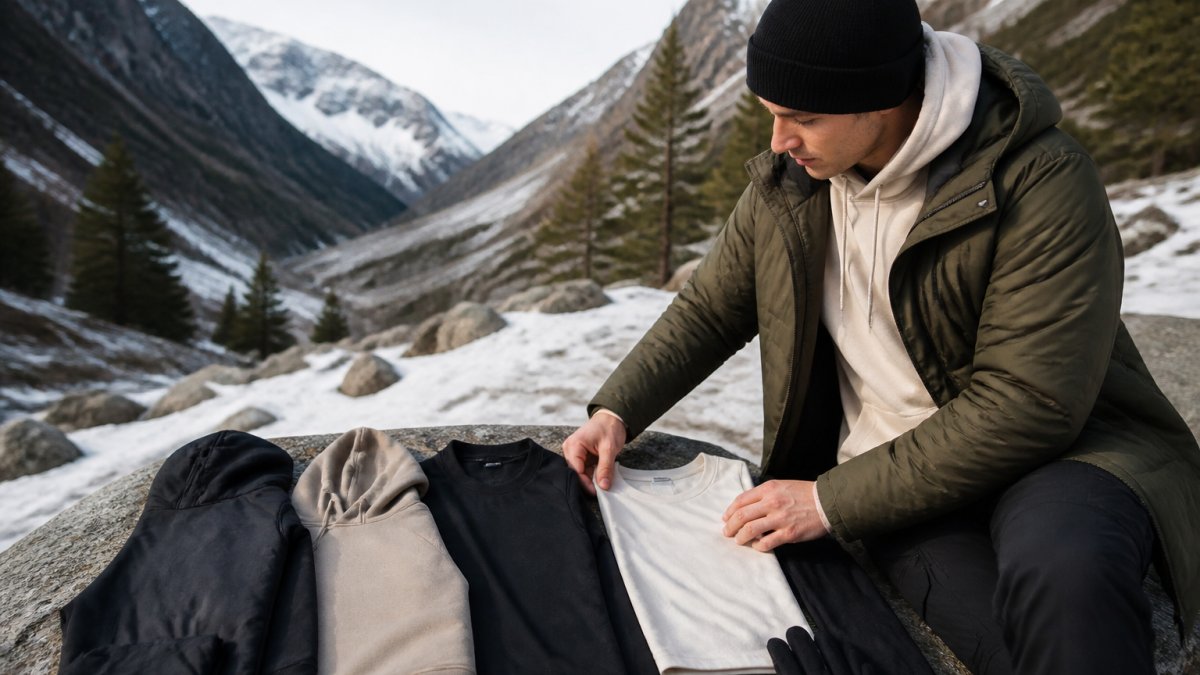
A shell that is too tight compresses your mid layer and kills its insulation. Size the shell to fit over your bulkiest mid layer, not over a t-shirt.
Practical test: put on your base layer, thickest mid layer, then the shell. You should be able to cross your arms, raise them overhead, and twist your torso without the shell pulling tight across the back or the mid layer bunching at the elbows.
Step 3: Choose an Outer Shell for Wind, Rain, and Snow
Your outer shell defends against wind, rain, and snow. It should be waterproof and windproof while letting sweat vapor escape, that is breathability in practice. Look for taped seams and a hood that fits over a beanie. Pit zips are worth having, they dump heat fast on a climb without removing the jacket. Without a shell, wind cuts straight through fleece and wool, that is why the outer layer completes the system rather than just adding warmth.
What to Wear for a Winter Day Hike: Trail-Tested Outfit Examples
A winter day hike outfit works best when each layer matches the day's temperature, wind, precipitation, and pace. These examples are built for a mountain trail but styled to still read as streetwear back at the car.
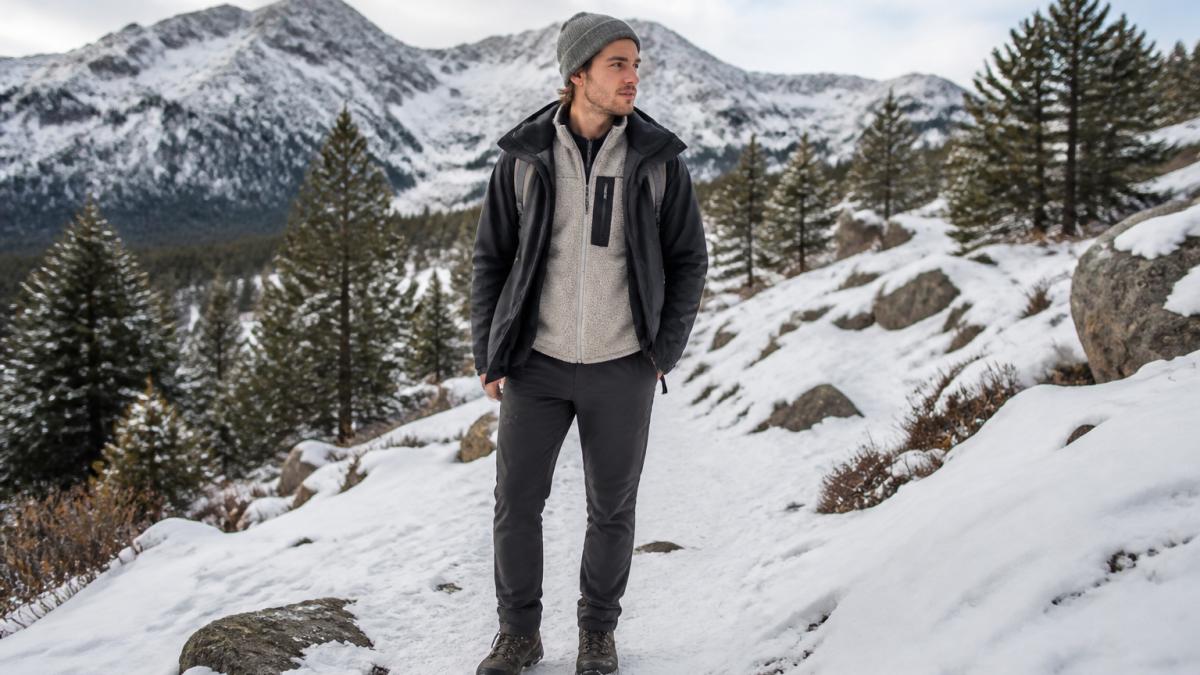
Mild Winter Day (Roughly 30-40°F), Fast Pace, Dry
- Base: Lightweight synthetic long-sleeve tee or a thin merino crew
- Mid: Grid fleece hoodie or a midweight crewneck, something with a clean, boxy cut
- Lower body: Stretch trail pants or tapered technical joggers over a thin base tight if you run cold
Cold, Windy Summit Day (Roughly 15-30°F), Dry
- Base: Midweight merino or synthetic with a snug fit
- Mid: Insulated puffy or a dense wool sweater; add a light fleece underneath if you run cold
- Shell: Waterproof, windproof shell with a hood that fits over a beanie and pit zips
Wet Snow or Freezing Rain (Roughly 25-35°F), Slow Pace
- Base: Synthetic, not merino, synthetics dry faster when you get damp
- Mid: Synthetic-fill puffy (keeps some loft when wet) or a wool sweater you can wring out
- Shell: Fully waterproof shell with taped seams; this is the day the shell stays on the whole hike
Overnight or Multi-Day Trip
- Base: Two synthetic base layers so you can rotate one while the other dries
- Mid: Fleece for moving plus a puffy for breaks and camp
- Shell: Full shell with pit zips and a hood that layers over a hat
How to Adjust These Outfits Mid-Hike
The lists above are starting points, not fixed kits. The real skill is adjusting on the move:
- Before the first climb: Remove your mid layer or open pit zips. You should feel slightly cool at the trailhead.
- At a sustained climb: Unzip the shell, push up sleeves, and drop the mid layer if you are sweating through your base.
- At a break or summit: Add the mid layer back and zip the shell before you stop, not after, body heat drops fast at rest.
The streetwear look stays intact across all four builds: a clean fleece, a well-cut shell, and tapered trail pants read as style, not survival gear, and the layering system underneath keeps you warm when the weather turns.
How to Avoid Overheating While Hiking in Winter
Overheating is the most common winter hiking problem, and it usually starts in the first ten minutes: you dress for the cold parking lot, then generate serious heat once you climb.
The fix is to start slightly cold. Remove a layer before you move and let your body warm up as you walk. If you are comfortable standing still at the trailhead, you are wearing too much.
Watch for these overheating signs:
- Sweat soaking your base layer
- Feeling flushed or clammy
- Wanting to unzip everything at once
When to Remove a Layer and When to Add One
Remove a layer the moment you feel sweat building on your back, early, before you soak your base layer. Add one when you stop for more than a few minutes, since body heat drops fast at rest. Simple rule: remove a layer before the climb, add a layer at every break.
Fit, Footwear, and Lower-Body Layering for Cold Trails
Fit and footwear decide whether your layering system works. A too-tight shell compresses your mid layer and kills its insulation; too-small boots cut off circulation and leave your feet cold no matter how good your socks are.
For your lower body, skip jeans, they hold moisture and restrict movement. Wear stretch trail pants, adding a thin base layer underneath on cold days.
For footwear:
- Waterproof hiking boots with room for a thick sock
- Wool or synthetic socks, never cotton
- Gaiters for deep snow
Common Layering Mistakes and How to Fix Them
Most layering mistakes come down to fabric choice, fit, or timing.
Mistake 1: Wearing cotton. Cotton holds sweat and chills you.
Mistake 2: Dressing for the trailhead. You overheat within a mile.
Mistake 3: Skipping the shell. Wind cuts through fleece and wool.
Mistake 4: Too-tight layers. Compression kills insulation.
Mistake 5: One giant jacket. A single heavy jacket gives you no way to adjust.
The throughline is simple: layering beats bulk. A flexible system keeps you warm on the summit, dry on the climb, and sharp-looking when you roll back into town.
Frequently Asked Questions
What is the 3-layer rule for winter hiking?
The three-layer system uses a base layer to wick sweat away from your skin, a mid layer to trap body heat, and an outer shell to block wind, rain, and snow. Each layer handles one job. When you wear all three together, you can remove or add pieces as your activity level and the weather change. This setup works whether you are on a mountain trail or walking city streets in January.
What should I wear as a base layer for winter hiking?
Choose a synthetic fabric like polyester or a merino wool blend for your next-to-skin layer. Both wick moisture and dry quickly. Avoid cotton because it holds sweat and loses insulation when wet. Look for a base layer that fits close to your body without restricting movement. Thumbholes and a longer hem help it stay in place under mid layers while you hike.
How do I stay warm without overheating on a winter hike?
Start your hike feeling slightly cool, not warm. Your body heat will build within the first 15 minutes of climbing. Unzip your outer shell or remove your mid layer before you start sweating heavily. Venting early prevents the damp, cold feeling that hits when you stop moving. Carry a lightweight pack so you can stash layers the moment you need to cool down.
Can I wear regular streetwear on a winter mountain trail?
Yes, if you choose pieces built for moisture management and insulation. A streetwear-style fleece or insulated jacket works as a mid layer. Pair it with a synthetic base layer underneath and a windproof shell on top. The key is avoiding cotton hoodies or jeans, which hold sweat and get cold fast. Look for streetwear brands that use technical fabrics and athletic fits.
Winter trails punish guesswork. Tremendous World builds premium athletic lifestyle apparel and streetwear for people who move between city streets and mountain trails, so your layers work as hard as you do. Our versatile pieces are made for city and outdoor environments alike, and they are designed to keep up with an active lifestyle from the trailhead to the dinner table. Get started with Tremendous World and build a layering system that looks as good as it performs.