 listicle
Is Quick Dry Fabric Good for Sensitive Skin? 2026 Review
Table of Contents
- Quick Dry Fabric and Sensitive Skin: The Honest Verdict
- How Quick Dry Technology Works (Evaporation and Fiber Density)
- Synthetic vs Natural Fibers for Sensitive Skin
- Best Moisture-Wicking Fabrics for Eczema and Reactive Skin
- Sensory Processing Disorder and Microplastic Shedding: Two Overlooked Factors
- How to Wash Athletic Wear for Sensitive Skin
- Managing Heat Rash, Chafing, and Humidity with Quick Dry Clothing
- Conclusion: Matching Quick Dry Fabric to Your Skin's Needs
- Frequently Asked Questions
Last Updated: September 23, 2026
Quick Dry Fabric and Sensitive Skin: The Honest Verdict
Quick dry fabric can be good for sensitive skin, but only when the fiber and the finish are chosen carefully. The quick-dry category is not automatically safe, and it is not automatically dangerous. The outcome depends on what the fabric is made of and what was added to it during manufacturing.
The core problem is that most buyers treat "quick dry" as a single material. It is not. It is a performance behavior produced by many different textiles, some of which suit reactive skin and some of which actively provoke it. At Tremendous World, we build premium athletic lifestyle apparel and streetwear for people who move between city streets and mountain trails.
Here is the short version before the detail. Quick dry fabric is any textile engineered to move moisture away from the body and release it into the air faster than cotton or other absorbent fibers. The mechanism is straightforward. The skin reaction risk is not.
What most guides get wrong is that they praise moisture management as a universal good. For someone with eczema, contact dermatitis, or a fragile skin barrier, a fast-drying synthetic can trap heat, hold residue, and shed particles that trigger flare-ups. The American Academy of Dermatology guidance on clothing and skin irritation makes the point plainly: what touches your skin for hours matters as much as what you put on it.
Below, we break down how the technology works, which fibers help reactive skin, which ones to avoid, and the two factors almost nobody mentions.
How Quick Dry Technology Works (Evaporation and Fiber Density)
Quick dry fabric works by wicking moisture to the surface and spreading it thin so it evaporates fast. Two properties decide how well a textile does this: how readily the fiber moves water, and how densely the fabric is woven.
Fibers fall into two camps. Hydrophobic fibers, like polyester and nylon, repel water and push it along the surface. Hydrophilic fibers, like cotton and TENCEL™ Lyocell, absorb it.
Synthetic vs Natural Fibers for Sensitive Skin
Natural fibers generally win for sensitive skin, but synthetics are not disqualified. The deciding factor is the finish, not the fiber family.
Here is the trade-off in plain terms:
| Fiber Type | Drying Speed | Skin Risk | Best For |
|---|---|---|---|
| Organic cotton | Slow | Low | Daily wear, eczema-prone skin |
| TENCEL™ Lyocell | Fast | Low | Active wear without synthetic harshness |
| Bamboo viscose | Moderate | Low | Sensory sensitivity, heat irritation |
| Linen | Moderate | Low | Humid climates, summer wear |
| Ultra-fine merino | Fast | Low to moderate | Cold-weather performance |
| Treated polyester | Very fast | Moderate to high | Intense workouts, short duration |
| Nylon blends | Very fast | Moderate | High-intensity activity |
The Hidden Risk: Chemical Additives in Quick Dry Finishes
The finish is where sensitive skin gets ambushed. Quick-dry synthetics are often treated with chemical agents to improve wicking, reduce odor, or add a cool-to-the-touch feel. These additives are the most common cause of textile sensitivity reactions, and they are rarely listed on the label.
Best Moisture-Wicking Fabrics for Eczema and Reactive Skin
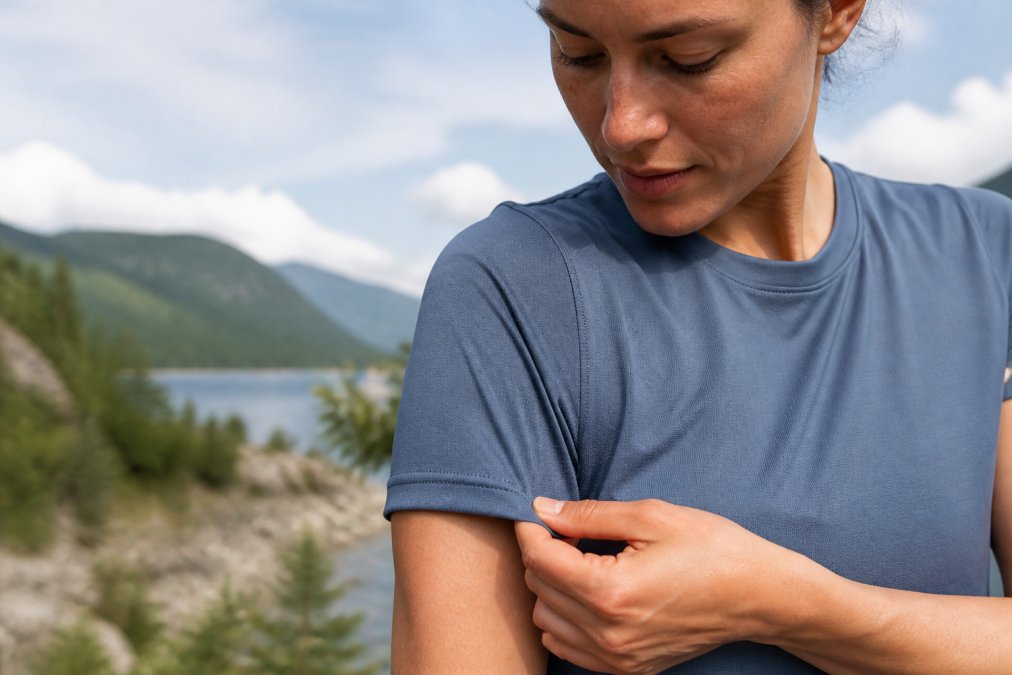
TENCEL™ Lyocell and bamboo viscose are the strongest picks for eczema-prone and reactive skin. Both move moisture efficiently without the harsh chemical finishes that make treated synthetics risky.
Comparing Hypoallergenic Options: Pros and Cons
Each hypoallergenic fabric solves a different problem, and none of them is perfect for every use case.
TENCEL™ Lyocell
- Pros: Gentle on skin, excellent moisture-wicking, breathable
- Cons: Higher price than standard cotton
Bamboo Viscose
- Pros: Extremely soft, naturally antibacterial, good for sensory sensitivity
- Cons: Prone to pilling
Organic Cotton
- Pros: Naturally non-irritating, easy to wash and maintain
- Cons: Dries slowly
Silk Base Layers
- Pros: Hypoallergenic, ultra-smooth, minimal bulk
- Cons: Requires hand washing and delicate care
Linen
- Pros: Excellent airflow, dries relatively quickly
- Cons: Can feel coarse until broken in
Ultra-fine Merino Wool
- Pros: Fast-drying, odor-resistant, temperature-regulating
- Cons: Still irritating for a small number of wool-sensitive people
Sensory Processing Disorder and Microplastic Shedding: Two Overlooked Factors
Two issues rarely appear in standard fabric guides, and both matter for sensitive skin.
How to Wash Athletic Wear for Sensitive Skin
Washing is where most sensitive-skin routines succeed or fail, and it is also where quick-dry fabrics create a problem that regular cotton does not. The same finishes that make a synthetic dry fast can hold detergent residue, trap fragrance, and re-deposit irritants against your skin on the next wear. Getting the wash right is not optional maintenance; it is part of whether the fabric is safe for you at all.
Follow this routine:
- Turn garments inside out before washing to protect the outer face and reduce pilling
- Use a fragrance-free, dye-free detergent formulated for sensitive skin
- Use the smallest effective dose, more detergent means more residue, not cleaner fabric
- Skip fabric softener entirely; it coats fibers, blocks wicking, and leaves a film on skin
- Skip dryer sheets for the same reason
- Wash in cold water to protect fiber structure and reduce finish breakdown
- Use a microfiber-catching bag for synthetic pieces to limit shedding
- Air dry when possible to extend fabric life and avoid heat-set residue
- Run an extra rinse cycle if your machine allows it, especially on new garments
- Strip the garment. Soak it in hot water with a small amount of fragrance-free detergent and a half cup of white vinegar, then run a full wash cycle with no detergent. This removes accumulated residue.
- Check the finish. If the garment still triggers a reaction after stripping, the finish chemistry is likely the problem, not the detergent. Retire it.
- Check the fit. A garment that rubs at seams or underarms can cause mechanical irritation that looks like a chemical reaction.
- Check the rest of your routine. Body wash, lotion, and deodorant can interact with fabric residue in ways that are hard to isolate.
Managing Heat Rash, Chafing, and Humidity with Quick Dry Clothing
Quick dry clothing helps most with heat rash and chafing, provided the fabric breathes and fits correctly. Heat rash develops when sweat gets trapped against skin, and chafing happens when damp fabric rubs. Fast evaporation removes the moisture that causes both.
Conclusion: Matching Quick Dry Fabric to Your Skin's Needs
The honest answer is that quick dry fabric is good for sensitive skin only when you match the fiber to your specific trigger. If your skin reacts to chemicals, choose TENCEL™, bamboo, or organic cotton. If you need maximum drying speed and your skin tolerates synthetics, treated performance knits work fine as long as you wash them properly.
Frequently Asked Questions
What type of fabric is best for sensitive skin?
Natural fibers like organic cotton, TENCEL™ Lyocell, and ultra-fine merino wool are often best because they are hypoallergenic and gentle on the skin barrier. For quick-dry performance, TENCEL™ and bamboo viscose offer moisture-wicking without harsh synthetics. Avoid fabrics with chemical finishes or rough textures that can cause contact dermatitis. Always check labels for fiber content and wash new garments before wearing to remove any manufacturing residues.
What is quick dry fabric made of?
Quick dry fabric is typically made from synthetic fibers like polyester, nylon, or spandex, sometimes blended with natural fibers like TENCEL™ or linen. These fabrics use capillary action to pull moisture away from the skin and spread it across the surface for faster evaporation. Some quick dry fabrics also have chemical treatments to enhance wicking. For sensitive skin, look for blends that prioritize softness and avoid harsh finishes.
Does synthetic fabric cause skin irritation?
Synthetic fabrics can cause irritation for some people, especially those with contact dermatitis or eczema. The fibers themselves may be less breathable, trapping sweat and heat, which can lead to heat rash or chafing. Additionally, chemical additives used in some quick dry finishes can trigger reactions. However, not all synthetics are problematic; high-quality nylon-Tencel blends or cool-to-the-touch knits can be gentle if they are free from irritating finishes and washed properly.
How to choose moisture-wicking clothing for sensitive skin?
Look for moisture-wicking clothing made from hypoallergenic fibers like TENCEL™, bamboo viscose, or ultra-fine merino wool. Check for labels that say 'no chemical finishes' or 'dye-free.' Prioritize breathability and a smooth texture to reduce friction. Wash new items with a fragrance-free, dye-free detergent before wearing. If you have eczema, patch-test a small area first. Always verify fabric composition and care instructions.
Can quick dry fabric make eczema worse?
Quick dry fabric can make eczema worse if it contains irritating chemical finishes or if the synthetic fibers trap sweat and heat, leading to flare-ups. However, when made from skin-friendly materials like TENCEL™ or bamboo viscose, quick dry fabric can help keep skin dry and reduce irritation. The key is to avoid harsh additives and ensure proper laundering. Consult a dermatologist for personalized advice.
Choosing the right fabric for reactive skin takes trial and error, and the wrong piece can set your skin back for days. Tremendous World offers premium athletic lifestyle apparel and streetwear built for people who move between the city and the trail, with versatile designs that work across both. Shop the collection to find pieces made for an active life, and check the site for current sizing and availability.