 how-to
How to Wash Odor Resistant Activewear Properly
Table of Contents
- Why Odor-Resistant Activewear Still Smells (and Why Normal Laundry Fails)
- Step-by-Step: How to Wash Odor Resistant Activewear Properly
- How to Get Sweat Smell Out of Synthetic Fabric
- Best Laundry Detergent for Athletic Wear
- Is Quick Dry Fabric Good for Sensitive Skin?
- Common Mistakes That Keep Your Activewear Smelling Bad
- How Often Should You Wash Odor-Resistant Gym Clothes?
- Frequently Asked Questions
Last Updated: October 6, 2026
Why Odor-Resistant Activewear Still Smells (and Why Normal Laundry Fails)
Here's the frustrating truth about how to wash odor resistant activewear properly: those "odor-fighting" labels don't mean the shirt cleans itself. They mean the fabric was built to slow odor down, not stop it forever.
At Tremendous World, we build performance apparel for people who move between city streets and mountain trails. That means we hear the same complaint constantly: "I paid good money for this, so why does it stink after one hike?"
The answer isn't the fabric. It's the laundry.
Odor-resistant activewear is synthetic clothing treated to slow bacterial growth, but trapped sweat and body oils still feed odor-causing bacteria inside the fibers. Once that bacteria builds up, a normal wash cycle can't reach it. The smell stays.
FTC guidance on textile labeling and care claims requires brands to back up performance claims, but "odor resistant" never promises a self-cleaning garment.
The Bacteria That Cause the Smell
Your sweat doesn't actually smell. The bacteria that feed on it do.
Synthetic fibers like polyester, nylon, and spandex trap oils and moisture in a way cotton doesn't. That trapped mix becomes a food source. Bacteria settle in, multiply, and release odor molecules that cling to the fabric.
This is why a cotton t-shirt can smell fine after a workout while your performance tee reeks. The synthetic fabric holds onto what feeds the bacteria.
Why Fabric Softener and Hot Water Make It Worse
Two common laundry habits actively make the problem worse.
Fabric softener coats fibers in a waxy film. That film traps bacteria and blocks the fabric's moisture-wicking ability. Your gear smells worse and stops performing.
Hot water can break down the stretch in spandex and nylon over time. It also sets certain odor compounds deeper into the fibers instead of releasing them.
Skip both. Cold water and no softener is the baseline for every wash.
Step-by-Step: How to Wash Odor Resistant Activewear Properly
Follow these four steps and most odor problems disappear within one or two washes. The full process takes about 10 minutes of hands-on work.
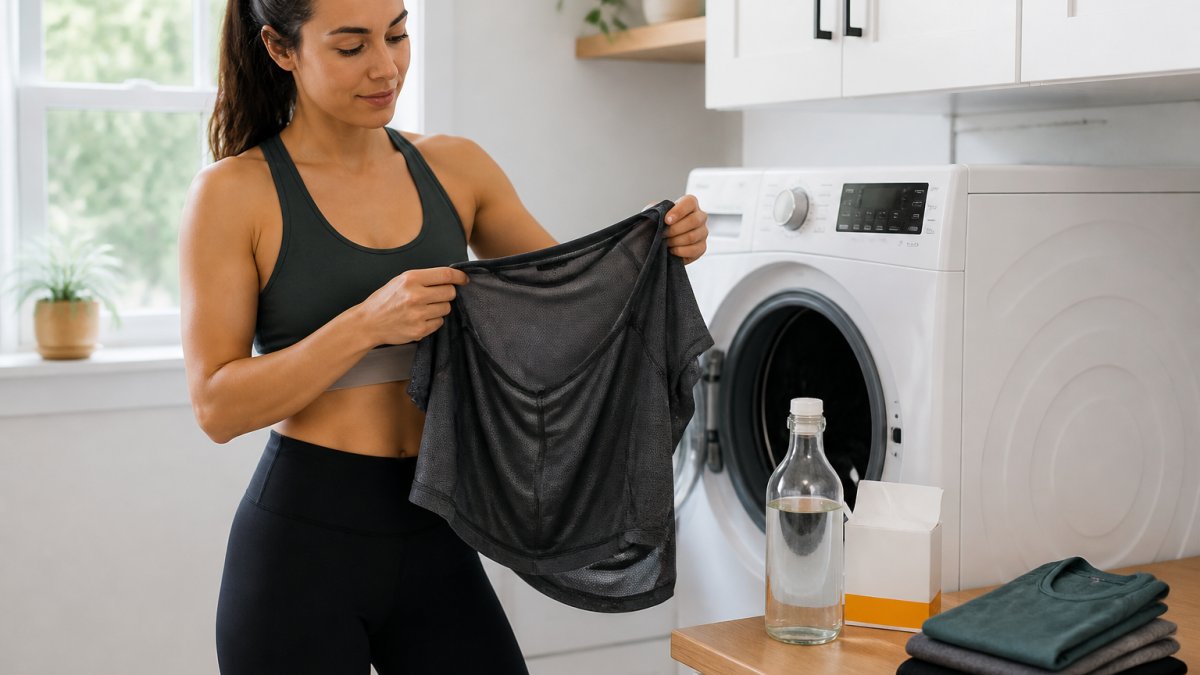
Step 1: Wash Immediately After Your Workout
Don't let sweaty gear sit in a gym bag overnight.
Bacteria start multiplying fast in warm, damp fabric. The longer a wet shirt sits, the deeper the bacteria work into the fibers. Wash the same day when you can.
Can't wash right away? Hang the garment to dry instead of balling it up. Airing it out slows bacterial growth until laundry day.
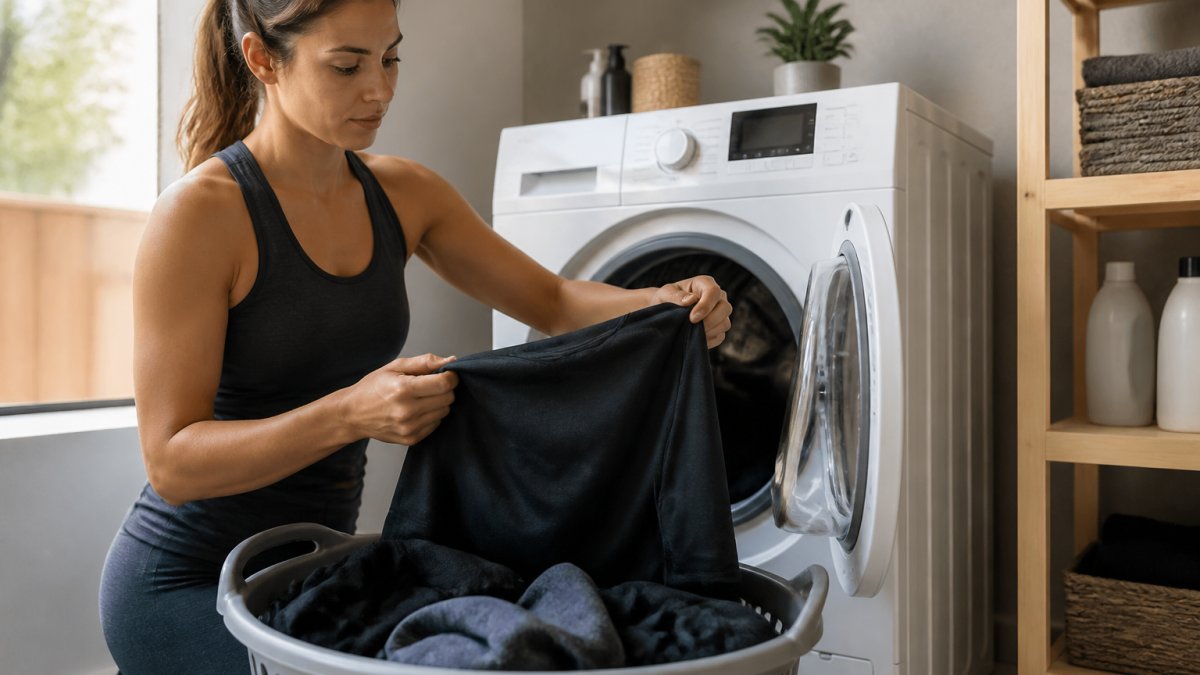
Step 2: Turn Garments Inside Out and Pre-Soak
Turning activewear inside out exposes the layer that touched your skin, where sweat and oils collect. This is where the odor lives.
For stubborn smells, pre-soak for 30 minutes in cold water with half a cup of distilled white vinegar. Vinegar helps break down residue without harsh chemicals.
- Turn every piece inside out
- Zip zippers and close Velcro to prevent snags
- Pre-soak heavily soiled items for 30 minutes
Step 3: Use Cold Water, Gentle Cycle, and the Right Amount of Detergent
Cold water protects elasticity and won't set odor deeper into synthetic fibers. The gentle cycle reduces wear on seams and stretch.
Use less detergent than you think you need. Extra soap leaves residue that traps bacteria and creates its own stale smell. A little goes a long way with performance fabric.
Step 4: Air Dry or Tumble Dry Low
High heat is the enemy of stretchy fabrics. It breaks down spandex and nylon, and it can bake odor into the fibers.
Air dry whenever possible. If you need the dryer, use the lowest heat setting and pull items out slightly damp.
How to Get Sweat Smell Out of Synthetic Fabric
The fix for sweat smell in synthetic fabric is targeting bacteria, not masking the scent. That means an enzyme-based detergent, a cold pre-soak, and patience with repeat washes.
Some gear needs two or three cycles before the smell fully lifts. That's normal. Bacteria that built up over months won't vanish in one wash.
For deep-set odors:
- Soak in cold water with half a cup of baking soda for one hour
- Wash on a gentle cycle with enzyme-based detergent
- Skip the dryer and air dry in direct sunlight when possible
- Repeat if the smell lingers
Sunlight helps kill surface bacteria naturally. Just don't leave stretch fabrics in harsh sun for hours, since UV can fade colors and weaken fibers over time.
Best Laundry Detergent for Athletic Wear
The best detergent for athletic wear is an enzyme-based, fragrance-free formula. Enzymes break down the proteins and oils that feed odor bacteria, while fragrance-free formulas avoid residue that traps smells.
How Enzyme Detergents Actually Work
Enzymes are proteins that act as catalysts. Different classes target different soils:
- Proteases break down proteins found in sweat and skin cells.
- Lipases break down body oils and sebum, which are the primary food source for odor bacteria on synthetic fabric.
- Amylases break down starches from food and deodorant residue.
- Cellulases smooth natural fibers like cotton, but they can damage some plant-based performance blends, so check the label.
This is why an enzyme detergent outperforms a standard surfactant-only formula on synthetic activewear: it digests the food source instead of just lifting surface dirt.
What to Look for
- Enzyme-based formulas that target organic residue
- Free of fabric softener and added softeners
- Free of dyes and heavy fragrance where possible
- Concentrated formulas so you use less per load
- pH-neutral or slightly acidic options, which are gentler on stretch fibers than highly alkaline formulas
What to Avoid
- Detergents with built-in softeners
- Bleach on spandex or nylon
- Pods overloaded with fragrance oils
- Wool-safe detergents on polyester (they lack the enzymes needed for oil breakdown)
- Enzyme detergents on Merino wool (they can degrade the fiber)
Powder detergents can leave residue in cold water, so liquid or concentrated formulas usually work better for performance fabric.
The Overlooked Variable: Your Washing Machine
If your gear still smells after a proper wash, the problem may not be the clothes. Front-loading washers in particular are prone to biofilm buildup, a layer of bacteria, mold, and detergent residue that coats the drum, gasket, and detergent drawer. Every load you run through a dirty machine gets recontaminated.
A simple maintenance routine:
- Run a hot water cycle with two cups of distilled white vinegar or a washing machine cleaner tablet, with no clothes in the drum. Do this monthly.
- Wipe the rubber door gasket with a diluted vinegar solution and dry it. This is where most biofilm hides in front loaders.
- Leave the door and detergent drawer open between loads so the interior dries out.
- Clean the detergent drawer by hand, residue builds up there and feeds bacteria.
- Check and clean the drain pump filter every few months if your machine has one.
Is Quick Dry Fabric Good for Sensitive Skin?
Quick dry fabric is generally good for sensitive skin because it pulls moisture away from the body instead of holding it against the skin. Less trapped moisture means less irritation and fewer odor problems.
That said, sensitive skin reacts to what's left on the fabric, not just the fabric itself.
- Detergent residue is a common trigger. Use less detergent and skip softener.
- Fragrance and dyes can irritate. Choose free-and-clear formulas.
- Tight fits trap sweat. Choose breathable, moisture-wicking pieces with some room.
Quick dry fabric itself is usually gentle. The laundry products you use matter more than the material.
Common Mistakes That Keep Your Activewear Smelling Bad
Most odor problems trace back to a handful of habits. Fix these and your gear lasts longer and smells better.
- Using fabric softener on performance fabric, which coats fibers and traps bacteria
- Washing in hot water, which can set odor and damage stretch
- Overloading the washer, which stops clothes from getting clean
- Using too much detergent, which leaves residue that holds smells
- Letting sweaty gear sit, which gives bacteria time to dig in
- Drying on high heat, which bakes odor into the fibers
- Skipping the inside-out step, which leaves the dirtiest layer unwashed
How Often Should You Wash Odor-Resistant Gym Clothes?
Wash odor-resistant gym clothes after every single wear. The treatment slows odor, but it doesn't stop bacteria from building up in sweat-soaked fabric.
Some people stretch it to two wears for low-sweat activities. That's a gamble. Once bacteria settle in, you're fighting a bigger problem than a quick wash would have solved.
A simple rule:
| Situation | Wash Frequency |
|---|---|
| Heavy sweat, intense workout | After every wear |
| Light activity, minimal sweat | After one or two wears |
| Worn outdoors on trails | After every wear |
| Worn briefly for styling only | After two or three wears |
Frequently Asked Questions
Does fabric softener ruin odor-resistant activewear?
Yes. Fabric softener leaves a waxy residue on synthetic fibers that traps odor molecules and blocks moisture-wicking performance. Over time, that residue builds up and creates a breeding ground for bacteria, which is why your gear smells worse after washing. Skip liquid softener and dryer sheets entirely. If you want softer fabric, add half a cup of distilled white vinegar to the rinse cycle instead. It neutralizes residue without coating the fibers.
Why does my activewear still smell after washing?
The most common cause is washing in warm or hot water, which can set odor-causing bacteria deeper into synthetic fibers instead of removing them. Other culprits include using too much detergent (which leaves residue), skipping the pre-soak on heavily soiled gear, and letting wet clothes sit in the washer after the cycle ends. Wash immediately after workouts, use cold water on a gentle cycle, and air dry promptly to break the cycle.
Can I use vinegar to remove odors from synthetic workout clothes?
Distilled white vinegar works well for synthetic fabrics because it breaks down the alkaline residue left by detergent and sweat. Add half a cup to the rinse cycle or use it as a pre-soak for 30 minutes before washing. Do not mix vinegar directly with bleach or enzyme-based detergents in the same load, since the acid can deactivate the enzymes. For stubborn odors, alternate vinegar soaks with a baking soda pre-soak every few washes.
Should I wash activewear in hot or cold water?
Cold water is the right choice for odor-resistant activewear. Hot water can damage spandex and elastane, reducing elasticity, and it can set odor-causing bacteria into polyester and nylon fibers rather than flushing them out. Cold water on a gentle cycle cleans effectively when paired with an enzyme-based detergent and a pre-soak for heavily soiled items. Reserve hot water for towels and cotton items that do not rely on performance coatings.