 how-to
How to Dress for Urban Hiking 2026
Table of Contents
- Understanding Urban Hiking Clothing Fundamentals
- Hiking Pants vs Leggings: Which Bottom Works Best for City Trails
- Hiking Clothes Layering Guide for Changing Conditions
- What to Wear Hiking in Summer: Heat and Ventilation
- Urban Hiking Outfit Ideas by Season and Forecast
- Footwear Trade-Offs: Pavement, Trails, and All-Day Comfort
- Accessories, Safety, and Style for Urban Routes
- Common Mistakes to Avoid on Urban Hikes
- Frequently Asked Questions
Last Updated: October 13, 2026
Understanding Urban Hiking Clothing Fundamentals
The core principle is layering: city weather shifts fast, and layers let you adapt without hauling a full backpack.
Your base layer manages moisture against your skin; without the right one, everything else fails.
Durability hits differently on urban trails: pavement tears fabric faster than dirt, and city debris is sharp.
Fit determines comfort on long walks. Loose fabric chafes, tight fabric restricts movement, and over hours both become unbearable.
Hiking Pants vs Leggings: Which Bottom Works Best for City Trails
Hiking pants outperform leggings on mixed urban terrain: they block brush, dirt, and scrapes, and they have pockets.
Leggings still work for short warm-weather loops on paved trails, where breathability matters more than protection.
The trade-off: pants are heavier and slightly restrictive; leggings breathe better and move like a second skin.
For most urban hikers, pants are the better choice:
- Durable fabric resists scrapes and tears
- Multiple pockets hold phone, keys, snacks
- Ankle cuffs keep dirt and debris out
Leggings make sense when:
- You're hiking paved routes only
- Temperature exceeds 75 degrees
- You value maximum mobility
Tremendous World's hiking pants handle pavement and dirt, fitting like everyday wear but performing like technical gear.
Hiking Clothes Layering Guide for Changing Conditions
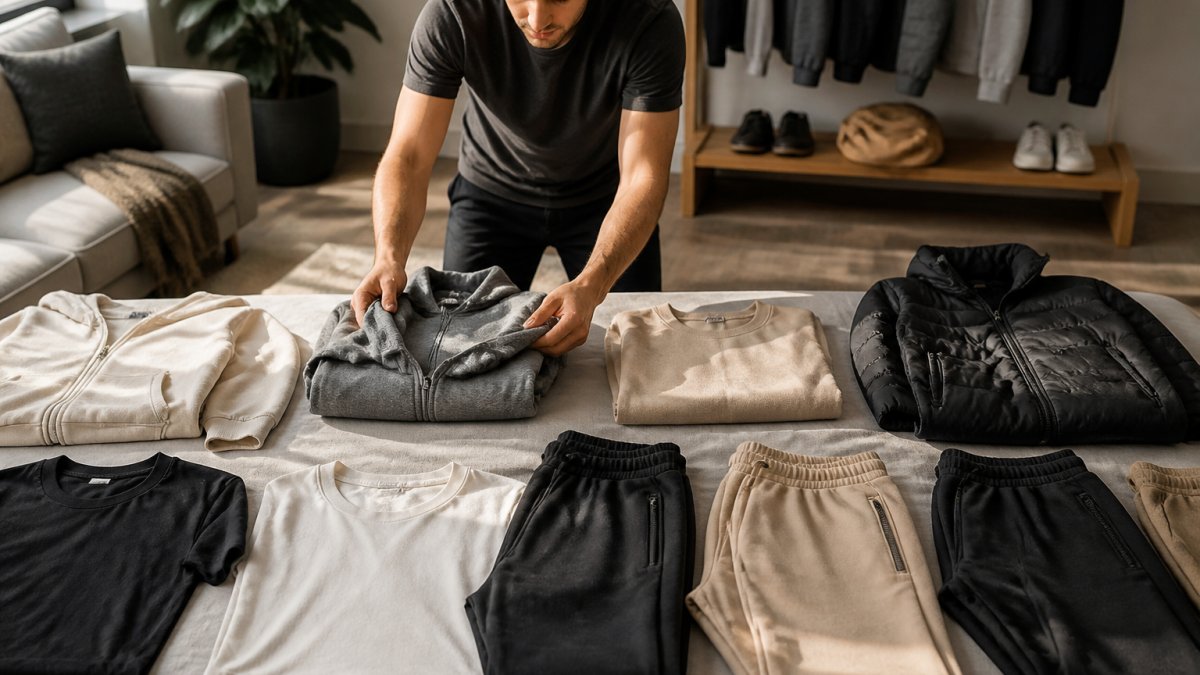
Three layers cover most situations: base, midlayer, outer.
Base Layers for Moisture Management
Your base layer moves sweat away from your body; moisture-wicking fabrics dry fast and keep you from getting cold when temperatures drop.
Merino wool regulates temperature and resists odor but costs more; polyester and nylon blends dry fastest and cost less.
Avoid cotton entirely: it holds moisture, dries slowly, and gets heavy when wet.
Midlayers for Warmth and Flexibility
Midlayers trap warm air and insulate without bulk. Fleece is the popular choice: lightweight, compressible, breathable, warm.
Soft-shells block wind while staying breathable; hard-shells block wind and rain but reduce breathability.
For urban hiking, a lightweight fleece works for most situations: it packs small, adds warmth without overheating, and layers under a rain jacket.
Outer Layers for Weather Protection
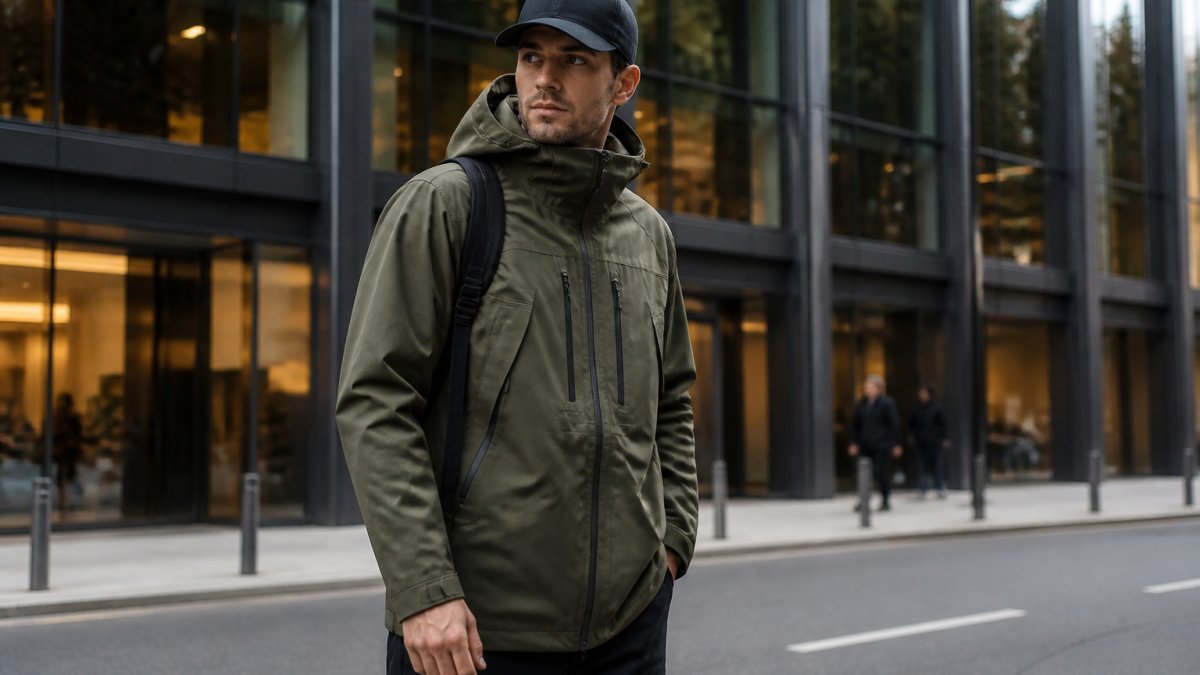
Your outer layer protects against wind and rain. A good rain jacket is lightweight, packs small, and breathes so sweat doesn't trap inside.
Hard-shells are fully waterproof but don't breathe well; soft-shells breathe better and handle light rain, but heavy downpours soak through.
For urban hiking you're out for hours, not days, a lightweight rain jacket or water-resistant soft-shell keeps you dry enough.
What to Wear Hiking in Summer: Heat and Ventilation
Summer urban hiking demands ventilation. Heat builds fast. You sweat more. Moisture management becomes critical.
Lightweight, light-colored clothing reflects heat; choose whites, grays, and pale neutrals.
Minimal coverage works: short sleeves breathe, shorts or lightweight pants let air flow. Avoid heavy fabrics.
Sun protection still matters: a breathable long-sleeve shirt protects your arms, a wide-brimmed hat shades your face, and sunglasses protect your eyes.
Ventilation strategies for summer:
- Choose light colors that reflect heat
- Wear minimal layers (base layer plus shorts)
- Pick moisture-wicking fabrics that dry fast
Hydration becomes your biggest concern in summer. Carry more water than you think you need. Stop in shade regularly.
Urban Hiking Outfit Ideas by Season and Forecast
Most guides organize outfits by season, but that's the wrong axis for an urban hike: one route can pass through a shaded building canyon, a windy waterfront, a sun-exposed plaza, and an air-conditioned transit car in two hours. Season gives the baseline; forecast and route tell you what to wear. The formulas below cover heat, cold, wind, and rain, plus a rule for adjusting mid-walk.
The Layer-Adjustment Rule
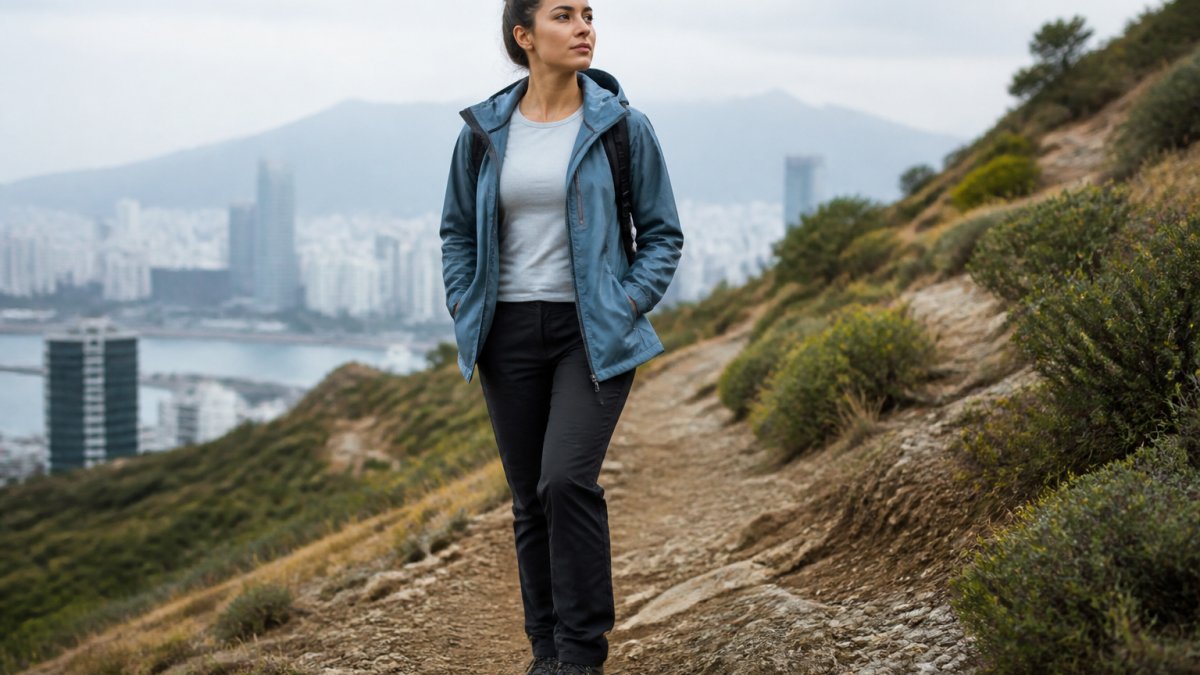
Dress so you feel slightly cool in the first five minutes. If you're warm standing still at the trailhead, you're overdressed and will overheat once moving, most people can wear one layer less than they would for standing around.
Keep removable layers accessible: midlayer in an outer pocket or top of the pack, shell in a side pocket, hat and gloves in a hip-belt pocket.
Heat (roughly 80°F and up, strong sun)
Goal: maximize ventilation and sun protection without trapping heat.
- Light-colored, loose, moisture-wicking short- or long-sleeve top. A breathable long-sleeve runs cooler than bare skin in direct sun.
- Lightweight shorts or thin quick-drying pants; thin pants protect against brush, insects, and sun.
- Wide-brimmed or ventilated brimmed hat, plus sunglasses.
Cold (roughly below 50°F, especially with wind)
Goal: insulate without bulk, and protect extremities first.
- Thermal-weight merino or synthetic base layer.
- Insulated midlayer, fleece or light synthetic puffy, sized to fit under the shell.
- Insulated socks, gloves, and a beanie; hands and head lose heat fastest.
Wind (any temperature, exposed waterfront or bridge)
Goal: block wind without sealing in sweat.
- Add a wind-resistant shell over your midlayer; wind strips heat far faster than still air, so a light windproof layer can feel like several degrees of warmth.
- Secure loose items, hat, hood, map, layers, so they don't become sails on a bridge or plaza.
- On a mild windy day, a windproof shell over a light base layer beats a heavy insulated jacket.
Rain (steady or intermittent)
Goal: stay dry enough without overheating.
- Waterproof or highly water-resistant shell with a hood that fits over a hat.
- Water-resistant pants for long routes or steady rain; wet pants on a windy day chill you fast.
- Water-resistant footwear and moisture-wicking socks, wet cotton socks cause blisters fastest.
Ready-to-Use Formulas by Forecast
- Mild and dry (roughly 55-75°F): moisture-wicking base layer + lightweight midlayer + packable shell + stretch hiking pants + crossover shoes + thin wool socks. The most versatile single setup.
- Hot and sunny: light wicking long- or short-sleeve top + shorts or thin pants + wide-brim hat + sunglasses + light shell for transit + extra water.
- Cold and dry: thermal base layer + insulated midlayer + windproof shell + insulated pants + insulated socks + gloves + beanie.
Adjusting Mid-Walk
The most common mistake is treating the outfit as fixed. Build in three adjustment points: after the first 10-15 minutes, at any major change in exposure (waterfront, long shade, climb), and before any long stop. A light shell and thin midlayer cover almost every mid-walk change.
Footwear Trade-Offs: Pavement, Trails, and All-Day Comfort
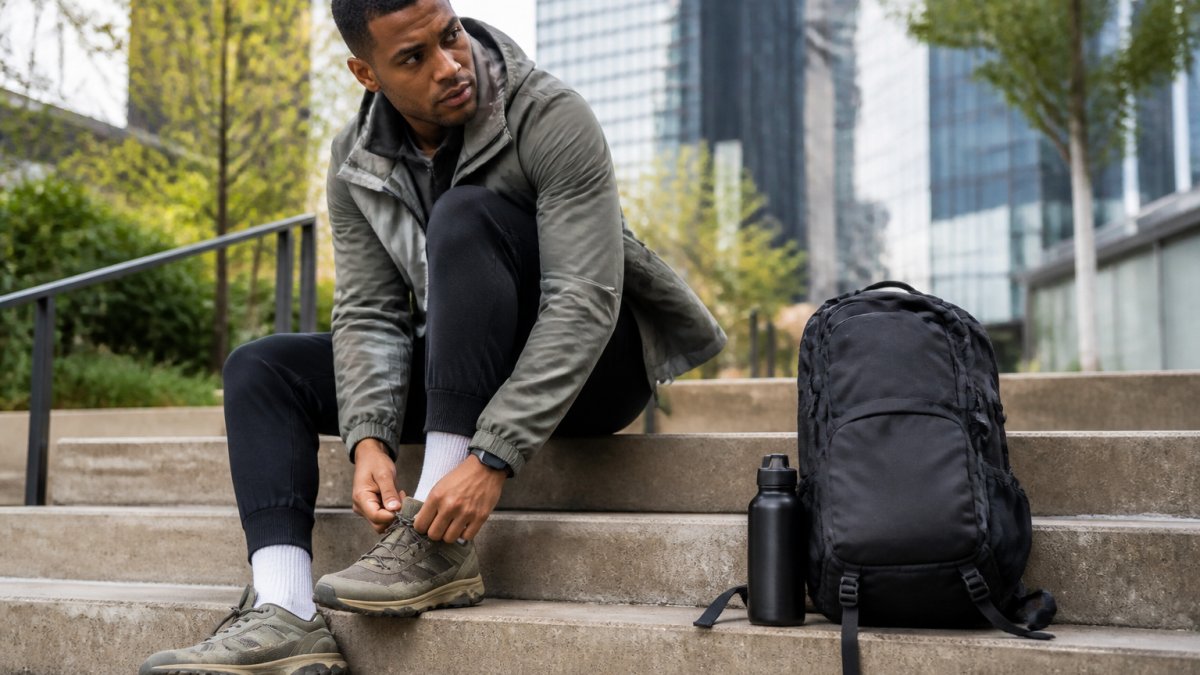
Footwear most separates a comfortable urban hike from a painful one, because your feet touch every surface on the route. A city-to-trail route can stack concrete sidewalks, park paths, painted metal stairs, gravel roads, and packed dirt in one afternoon, and each loads your feet differently. The useful question isn't "what's the best hiking shoe" but "which trade-off can I live with for the surfaces I actually walk."
How Each Surface Changes the Equation
- Concrete and asphalt are hard and abrasive, transmitting impact straight up, so cushioning and a slightly rockered sole matter more than lug depth. They also grind down soft rubber fast.
- Park paths and packed dirt reward grip and a moderate lug pattern, where trail-oriented shoes feel natural.
- Stairs, curbs, and transit steps reward ankle support and a stable heel counter; repeated step-ups load the ankle and Achilles.
The Three Realistic Categories
Trail runners. The most common compromise for mixed routes: light, flexible, cushioned, with enough tread for dirt and gravel.
Hiking boots and mid-height shoes. Maximum ankle support, protection, and durability on rough ground, at the cost of weight, stiffness, a longer break-in, and an "expedition" look.
Approach and crossover shoes sit between trail runners and boots: more support than a runner, less weight than a boot, with an outsole for rock and smoother ground.
What to Check Before You Buy
- Outsole compound and tread depth. Soft sticky rubber grips rock and wet stone but wears fast on pavement; harder rubber lasts longer on concrete but slips on wet rock. Shallow, wide tread generally beats deep lugs on slick urban surfaces.
- Cushioning and drop. More cushioning helps on concrete; a lower drop reduces the pitched-forward feel on stairs but loads the calf and Achilles more, so transition gradually.
- Heel counter and midfoot hold. A firm heel counter and secure midfoot prevent sliding on descents and rolling on stair edges, this matters more on urban routes than most buyers expect.
Socks, Lacing, and Break-In
Socks do as much work as the shoe. Moisture-wicking wool or synthetic blends move sweat away and cushion impact; cotton holds moisture and causes blisters.
Lacing is adjustable per terrain: a tighter midfoot and heel lock stabilizes the foot on stairs and descents, while loosening the forefoot relieves pressure when feet swell.
Break in new footwear on short, mixed-surface walks first.
Matching Footwear to the Route
- Fully paved, short loop: walking or everyday sneakers; prioritize cushioning and a secure heel.
- Mixed pavement, stairs, and park trail: trail runners or crossover/approach shoes; prioritize wet-surface grip and midfoot hold.
- Long route with rough trail, roots, and loose rock: mid-height hiking shoes or boots; prioritize ankle support and toe protection, and accept the extra weight.
If you own only one pair, a low-profile crossover shoe with moderate cushioning, a firm heel counter, and shallow-to-moderate tread is the most forgiving choice for a route that mixes city and trail.
Accessories, Safety, and Style for Urban Routes
Accessories transform comfort and safety: a good backpack distributes weight, poles reduce joint stress, and a hat and sunglasses manage sun and rain.
Trekking poles reduce impact on knees and ankles and add stability on uneven pavement, optional, but helpful on steep city slopes.
Hats and sunglasses are essential: a wide-brimmed hat blocks sun and rain, and sunglasses cut glare and protect your eyes.
Safety accessories for urban routes:
- Reflective gear if hiking at dawn or dusk
- A headlamp or flashlight for low-light conditions
- A whistle in case of emergency
Style matters too.
Common Mistakes to Avoid on Urban Hikes
Cotton kills comfort: it absorbs sweat, stays wet, and gets heavy.
Overpacking layers wastes space.
Ignoring chafing leads to misery: tight shorts, badly placed seams, and trapped moisture all cause problems.
Wearing brand-new shoes on long hikes causes blisters. Break footwear in on short walks first.
Skipping sun protection seems fine until you're burned. Sunscreen, hat, and sunglasses prevent damage.
Underestimating weather changes catches people off guard.
Urban hiking demands practical clothing.
Frequently Asked Questions
Is it better to wear leggings or hiking pants for urban hiking?
Hiking pants offer more durability, pockets, and protection from brush and dirt on mixed terrain. Leggings provide better mobility and breathability for shorter city routes with minimal obstacles. Choose hiking pants if you'll encounter muddy sections or rough surfaces; leggings work well for paved-trail combinations where comfort and range of motion matter most. Both should be moisture-wicking and quick-drying.
What should you avoid wearing on an urban hike?
Skip cotton clothing, which absorbs sweat and takes forever to dry. Avoid heavy denim, loose-fitting garments that catch on branches, and shoes without proper grip or cushioning. Don't wear brand-new footwear without breaking it in first, blisters ruin a hike fast. Steer clear of overly baggy layers that restrict movement, and never skip sun protection like sunglasses or a hat, even on cloudy days.
How should you layer clothes for urban hiking in cold or changing weather?
Start with a moisture-wicking base layer against your skin to pull sweat away from your body. Add a midlayer like fleece or a lightweight insulated jacket for warmth. Top it with a windbreaker or rain jacket for weather protection. This system lets you remove layers as you warm up during activity and add them back when you stop or conditions shift. Choose packable outer layers you can stuff into a backpack.
What shoes are best for walking long distances on city streets and trails?
Trail runners or approach shoes balance grip, cushioning, and support for mixed surfaces better than road running shoes or traditional hiking boots. Look for sturdy soles with aggressive tread for muddy sections, cushioned midsoles for pavement impact, and ankle support for uneven terrain. Ensure your shoes have breathable uppers to prevent overheating during urban hikes, and always break them in before tackling longer routes.