 how-to
How to Build a Versatile Capsule Wardrobe
Table of Contents
- What a Versatile Capsule Wardrobe Actually Means
- Step 1: Audit and Declutter Your Current Closet
- Step 2: Choose Your Color Palette and Capsule Size
- Capsule Wardrobe Checklist for Beginners
- Best Versatile Clothes for Travel and Active Lifestyles
- How to Style Capsule Wardrobe Pieces for Any Occasion
- Capsule Wardrobe Maintenance, Fit, and Garment Care
- Common Capsule Wardrobe Mistakes to Avoid
Last Updated: August 23, 2026
What a Versatile Capsule Wardrobe Actually Means
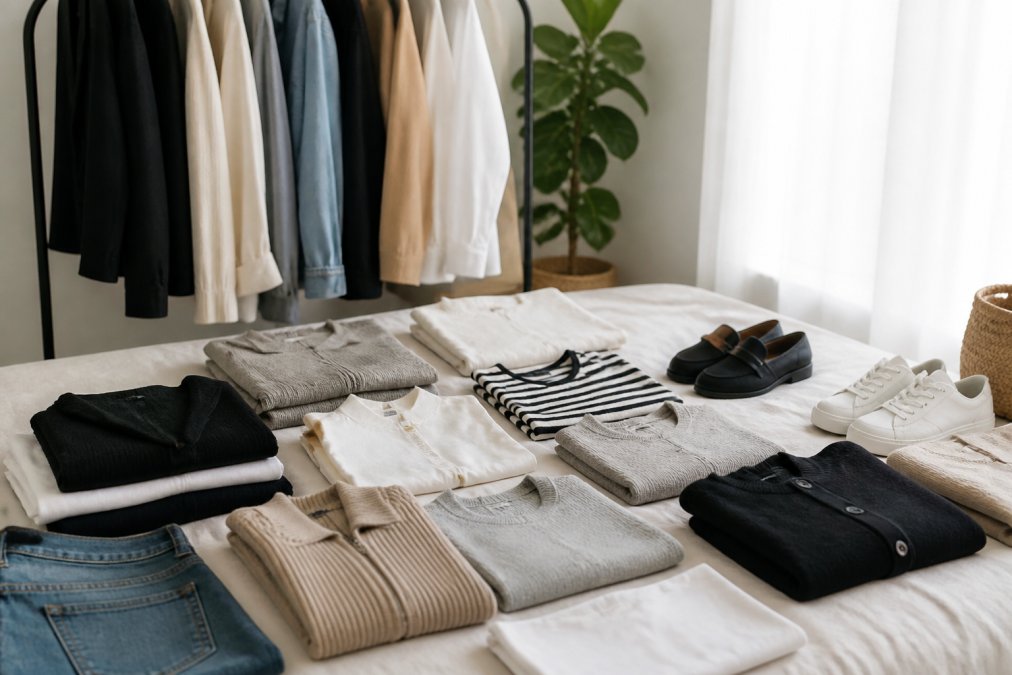
A capsule wardrobe is a curated collection of high-quality, interchangeable clothing pieces that work together to create many outfits from a minimal number of items. The goal is to own fewer clothes because you've chosen better.
At Tremendous World, we think about this constantly. Our apparel is built for people who need one outfit to carry them from a morning trail run to a client meeting to a rooftop dinner. That's the capsule wardrobe philosophy made physical: versatility designed in, not improvised.
A well-built capsule system typically contains 25 to 40 pieces, including shoes and outerwear. Every item earns its place by working with at least three other pieces. According to the Environmental Protection Agency's overview of textile waste, Americans discard millions of tons of clothing annually, much of it barely worn. A capsule wardrobe is a direct answer to that pattern: buy less, wear more, choose intentionally.
Step 1: Audit and Declutter Your Current Closet
Before you add anything, you need to understand what you already have. A closet audit is the foundation of the entire process.
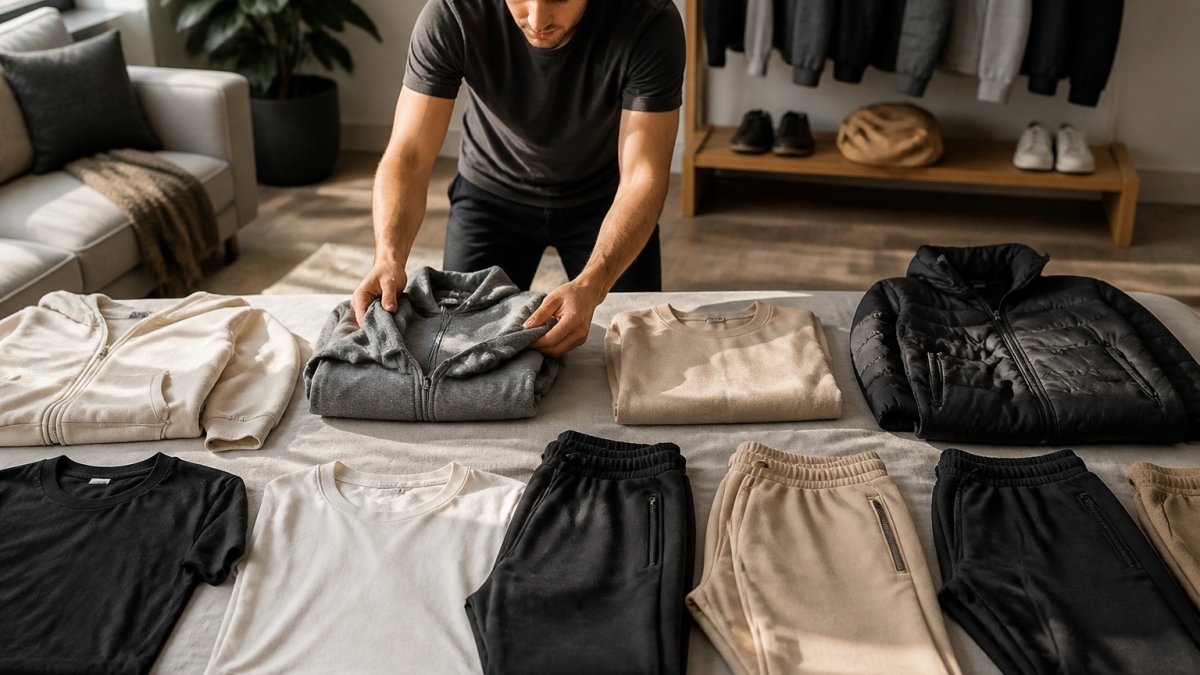
Pull everything out. Physically remove every item from your closet, drawers, and any overflow storage. Lay it flat. This forces you to confront the full picture.
How to Decide What Stays and What Goes
For each item, ask four questions:
- Does it fit well right now? Not "it'll fit when I lose ten pounds." Right now.
- Is it in good condition? Pilling, fading, broken zippers, and worn-through knees are disqualifiers unless you plan to repair them this week.
- Have I worn it in the past 12 months? If not, there's a reason. Identify it honestly.
- Does it work with at least three other items I'm keeping? This is the capsule test. Standalone pieces break the system.
Items that pass all four stay. Items that fail any one go into a donate, sell, or discard pile. A common mistake is keeping "aspirational" items, the blazer for a job you didn't get, the hiking pants for a trip you never took. Your capsule wardrobe should reflect your actual life, not the life you imagine having.
Step 2: Choose Your Color Palette and Capsule Size
A functional capsule palette has two layers: a neutral base and a small accent range. Your neutral base should cover roughly 70-80% of your pieces. Think navy, white, black, grey, tan, and olive. Your accent colors, two or three at most, add personality without breaking the system.
Hold any two pieces from your capsule next to each other. If they clash, one of them shouldn't be in the palette.
Capsule size by lifestyle:
| Lifestyle | Recommended Capsule Size | Key Emphasis |
|---|---|---|
| Urban professional | 30-37 pieces | Shirting, tailored trousers, structured outerwear |
| Active/outdoor-focused | 28-35 pieces | Performance base layers, durable bottoms, trail-ready outer layer |
| Hybrid (work + adventure) | 33-40 pieces | Versatile pieces that cross both contexts |
| Minimalist traveler | 22-28 pieces | Wrinkle-resistant, lightweight, multi-use |
The hybrid category is where Tremendous World's apparel philosophy lives. If your week involves a morning hike, a video call, and a post-work social outing, you need pieces that don't force a full costume change between each.
Capsule Wardrobe Checklist for Beginners
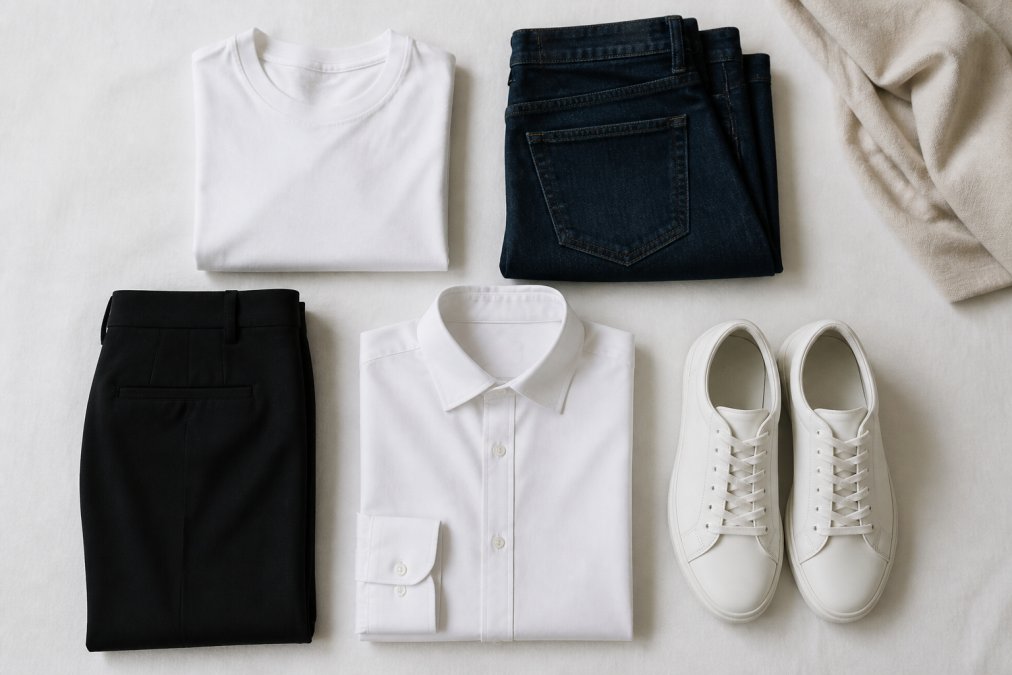
A solid starting capsule covers five categories: tops, bottoms, outerwear, footwear, and layering pieces.
Base Layers and Everyday Tops
Base layers are the workhorse of any capsule system. They need to hold up to daily wear, layer well, and look intentional on their own.
Essential tops checklist:
- 3 quality crew-neck or v-neck tees in neutral shades (white, grey, navy)
- 2 long-sleeve base layer tops (moisture-wicking if your lifestyle is active)
- 2 button-down shirts (one white, one chambray or light blue)
- 1 fitted polo or smart casual top
- 1 lightweight hoodie or sweatshirt
Quality matters most here. Cheap tees lose their shape after ten washes. High-quality pieces maintain their fit and color for years, making cost-per-wear the honest metric.
Bottoms, Outer Layers, and Footwear
Bottoms:
- 2 pairs of classic denim (one dark wash, one lighter or distressed)
- 1 pair of tailored trousers or chinos in a neutral shade
- 1 pair of versatile shorts (athletic-cut works for both trail and casual)
- 1 pair of performance or jogger-style pants
Outer layers:
- 1 structured jacket or blazer (navy or charcoal)
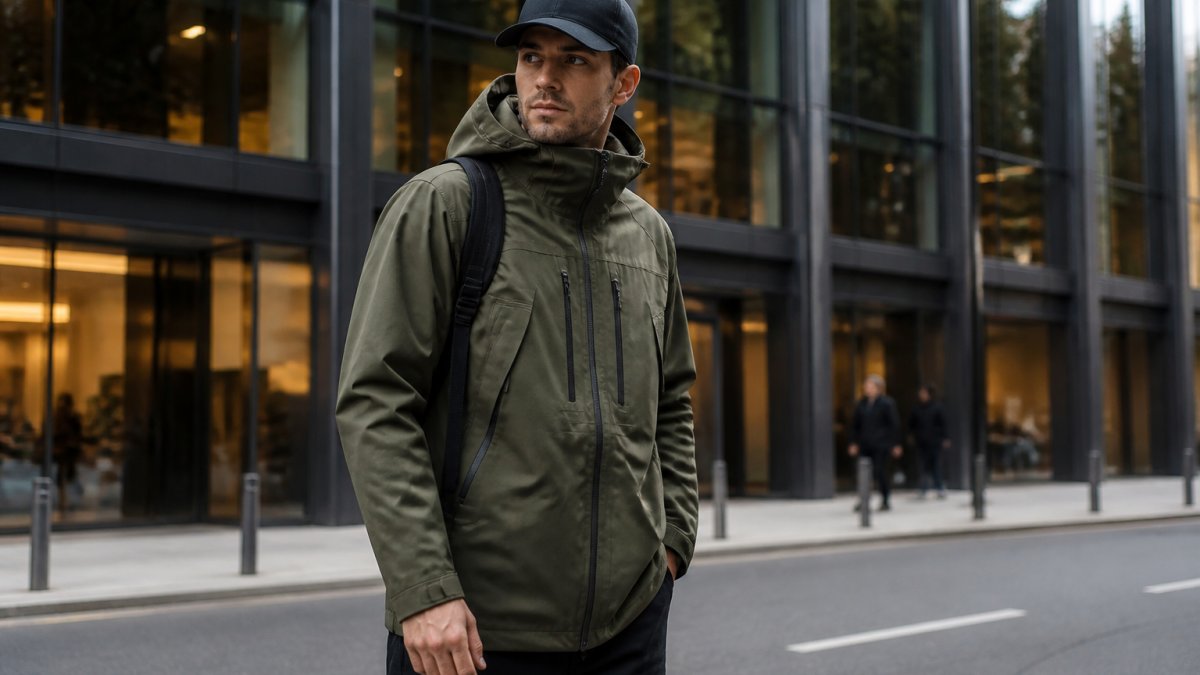
- 1 lightweight packable jacket (wind and water resistant)
- 1 mid-layer fleece or quilted vest
Footwear (3-4 pairs covers most lifestyles):
- 1 clean white or minimal sneaker for everyday wear
- 1 trail or hiking shoe that reads casual enough for city use
- 1 leather or leather-look shoe for professional settings
- 1 sandal or slip-on for low-effort days
Best Versatile Clothes for Travel and Active Lifestyles
Travel capsules have one non-negotiable requirement: every piece must work harder than it would at home.
The best versatile clothes for travel resist wrinkles, manage moisture, compress without losing shape, and transition between contexts without requiring extra accessories. For active lifestyles, you need garments that perform on a trail but don't announce themselves as "hiking clothes" when you walk into a restaurant.
According to the Outdoor Industry Association's participation trends, outdoor activity participation has grown steadily, with millions of Americans regularly combining outdoor recreation with urban social activities in the same day. That behavioral pattern demands a wardrobe built around transition, not separation.
Travel capsule priorities:
- Merino wool or synthetic blend tees that handle temperature variation
- Joggers or chinos with a stretch component that work for both hiking and dining
- A packable outer layer that compresses to fist-size
- Footwear that handles light trail conditions and looks clean on pavement
The common mistake in travel packing is bringing "just in case" items. Your travel capsule should be built around what you'll definitely do, not what you might theoretically do.
How to Style Capsule Wardrobe Pieces for Any Occasion
Styling a capsule wardrobe isn't about having a uniform. It's about building outfit combinations that feel deliberate regardless of context.
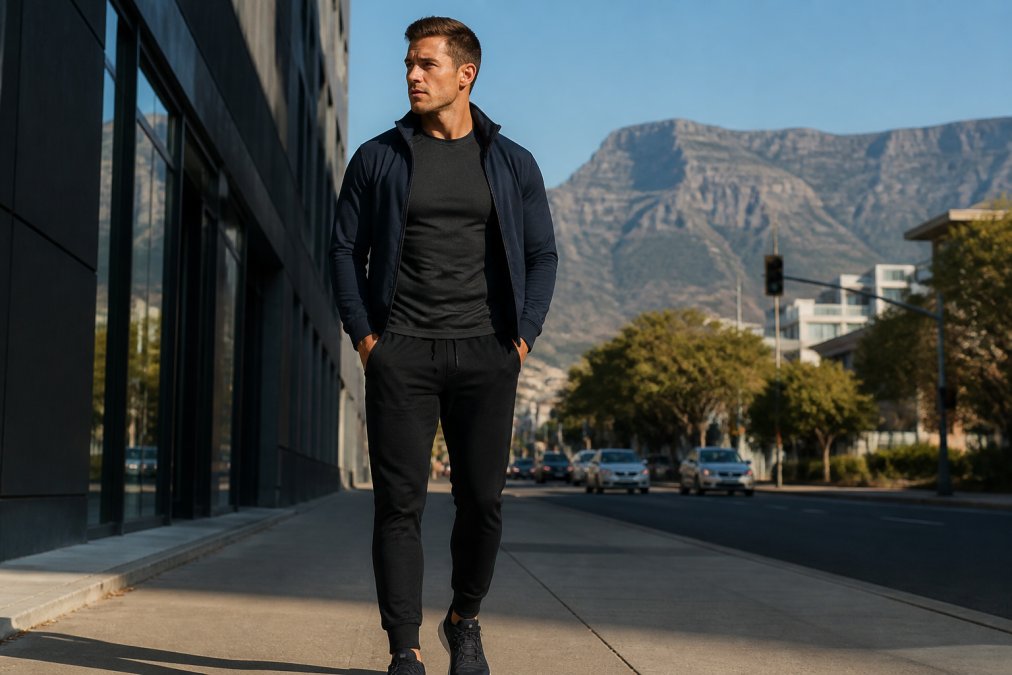
A capsule of 30 pieces, chosen correctly, can generate well over 100 distinct outfit combinations. The key is understanding which variables to change and which to keep stable.
Mixing and Matching for Professional vs. Casual Settings
The same dark chino can anchor a professional look with a white button-down and leather shoe, then shift to casual with a fitted tee and clean sneaker. The garment doesn't change. The surrounding pieces do.
Professional context: tailored trouser + button-down + structured jacket + leather shoe Smart casual: dark chino + fitted tee + unstructured blazer or bomber + clean sneaker Active casual: performance jogger + long-sleeve base layer + packable jacket + trail-capable sneaker
The biggest mistake people make is trying to make one outfit do everything. A capsule wardrobe doesn't mean wearing the same thing everywhere. It means having a small set of pieces that can be reconfigured for anywhere.
Seasonal Transition Strategies
Build your capsule around a core of year-round pieces, then add a small seasonal module of 5-8 items that rotate in and out. Your white tee, dark denim, and classic sneaker work in every season. Your heavyweight wool coat and thermal base layers are seasonal additions, not permanent residents.
According to the American Apparel and Footwear Association's consumer trend data, intentional shopping habits are increasing as consumers prioritize pieces that work across multiple seasons.
Practically, this means:
- Spring/fall: add a mid-weight layer and a light rain jacket to your core
- Summer: swap heavyweight bottoms for shorts and lighter fabrics
- Winter: add thermal base layers, a heavyweight outer layer, and one or two cold-weather accessories
Store off-season modules in a separate container so your active capsule stays clean and navigable.
Capsule Wardrobe Maintenance, Fit, and Garment Care
A capsule wardrobe only works if the pieces stay in good condition. Garment care is the most direct lever on cost-per-wear.
Wash less frequently than you think you need to. Most garments don't need washing after a single wear unless they're visibly soiled or odorous. Over-washing degrades fabric faster than almost anything else.
Core garment care principles:
- Wash in cold water to preserve color and prevent shrinkage
- Turn dark items inside-out before washing to prevent fading
- Air-dry performance fabrics rather than machine-drying them
- Hang structured pieces immediately after wearing to maintain shape
- Steam rather than iron where possible to reduce fabric stress
Fit is equally non-negotiable. If something fits 80% correctly, budget for a tailor. A $15 hem or a $25 waist adjustment on a quality trouser extends its useful life by years.
Common Capsule Wardrobe Mistakes to Avoid
1. Buying everything at once. The urge to "start fresh" leads to rushed purchases that don't actually work together. Build gradually.
2. Prioritizing trends over longevity. A capsule wardrobe is built on staples that hold their relevance across seasons. A piece that's on-trend this spring but dated by fall has no place in a capsule system.
3. Ignoring your actual lifestyle. If you work from home four days a week, you don't need five dress shirts. Build for reality.
4. Underinvesting in key pieces. The items you wear most often deserve the most investment. Skimping on a daily-wear tee or a go-to outer layer creates a weak center in your capsule.
5. Skipping digital planning tools. Apps like Stylebook or Whering let you photograph your current wardrobe, plan outfit combinations digitally, and identify gaps before you spend. Stylebook's wardrobe planning methodology is one approach worth exploring for visual planners.
6. Treating the capsule as finished. A capsule wardrobe is a living system, not a one-time project. The best ones evolve slowly and deliberately over time.
The throughline across all these mistakes: impatience. A capsule wardrobe built over six months of intentional decisions will outperform one assembled in a weekend shopping spree every time.
Frequently Asked Questions
How many items should be in a versatile capsule wardrobe?
Most capsule wardrobe frameworks recommend between 25 and 40 pieces total, including tops, bottoms, outer layers, shoes, and accessories. A tighter capsule of 25 items works well if you have a consistent lifestyle, while 35-40 pieces gives more flexibility for those who shift between professional settings, gym sessions, and weekend outdoor activities. The goal is outfit combinations that multiply, not a fixed number.
What are the most common capsule wardrobe mistakes to avoid?
The biggest mistakes are buying trendy pieces that don't match anything else you own, ignoring fit, and choosing a color palette that doesn't actually reflect how you dress day to day. Many beginners also underestimate outer layers and footwear, which limit how many outfits a capsule can actually produce. Buying low-quality pieces to save money upfront often raises your cost-per-wear over time, which defeats the purpose of intentional shopping.
What is the 3-3-3 rule for a capsule wardrobe?
The 3-3-3 rule is a minimalism challenge where you pick 3 pieces from your existing wardrobe and wear only those 3 items for 3 months. It's a practical way to test which wardrobe staples you actually reach for versus what just takes up closet space. It's not a permanent capsule system, but it's one of the fastest ways to identify your true personal style before committing to a curated collection.
How do you transition a capsule wardrobe between seasons?
Seasonal transition works best when your capsule is built around neutral shades and layerable pieces. Swap out 8-12 seasonal items, think lightweight shirting for summer, heavier outer layers for winter, while keeping your core base layers, classic denim, and trousers in rotation year-round. Store off-season pieces properly in breathable garment bags to maintain quality. This approach keeps your capsule size manageable without rebuilding from scratch every few months.
Building a capsule wardrobe that genuinely works across city streets and trail conditions takes the right foundation pieces. Tremendous World's premium athletic lifestyle apparel is designed specifically for that overlap: garments that perform on a mountain and look sharp at dinner, built for people who don't separate their active life from their social one. Shop Now to find the versatile pieces that belong at the core of your capsule.
This article was written using GrandRanker